 Func Eats

What is Mindful Eating?
Mindful eating is a practice rooted in mindfulness principles, where you bring full awareness to the experience of eating. Unlike mindless munching while scrolling on your phone, it involves tuning into your body's hunger cues, savoring flavors, and making conscious choices. In 2026, with fast-paced lives and nutrient-dense functional foods on the rise, mindful eating emerges as a smarter way to optimize nutrition without restrictive diets.
This beginner's guide breaks down foundational techniques like intuitive portioning, sensory meal awareness, and seamless daily habit integration. You'll also find practical nutrition tips and starter exercises to boost weight management and energy levels.
Key Benefits of Mindful Eating
Adopting mindful eating yields impressive results. Studies show it aids weight management by preventing overeating—participants often reduce calorie intake naturally by 10-20% without counting. It stabilizes energy levels by promoting balanced blood sugar through better food choices.
- Weight Management: By listening to fullness signals, you avoid emotional eating.
- Energy Boost: Enhanced digestion and nutrient absorption lead to steady vitality.
- Mental Clarity: Reduces stress-eating, fostering a positive food relationship.
For evidence-based insights, check the Harvard T.H. Chan School of Public Health Nutrition Source, which highlights mindfulness in healthy eating patterns.
Foundational Technique 1: Intuitive Portioning
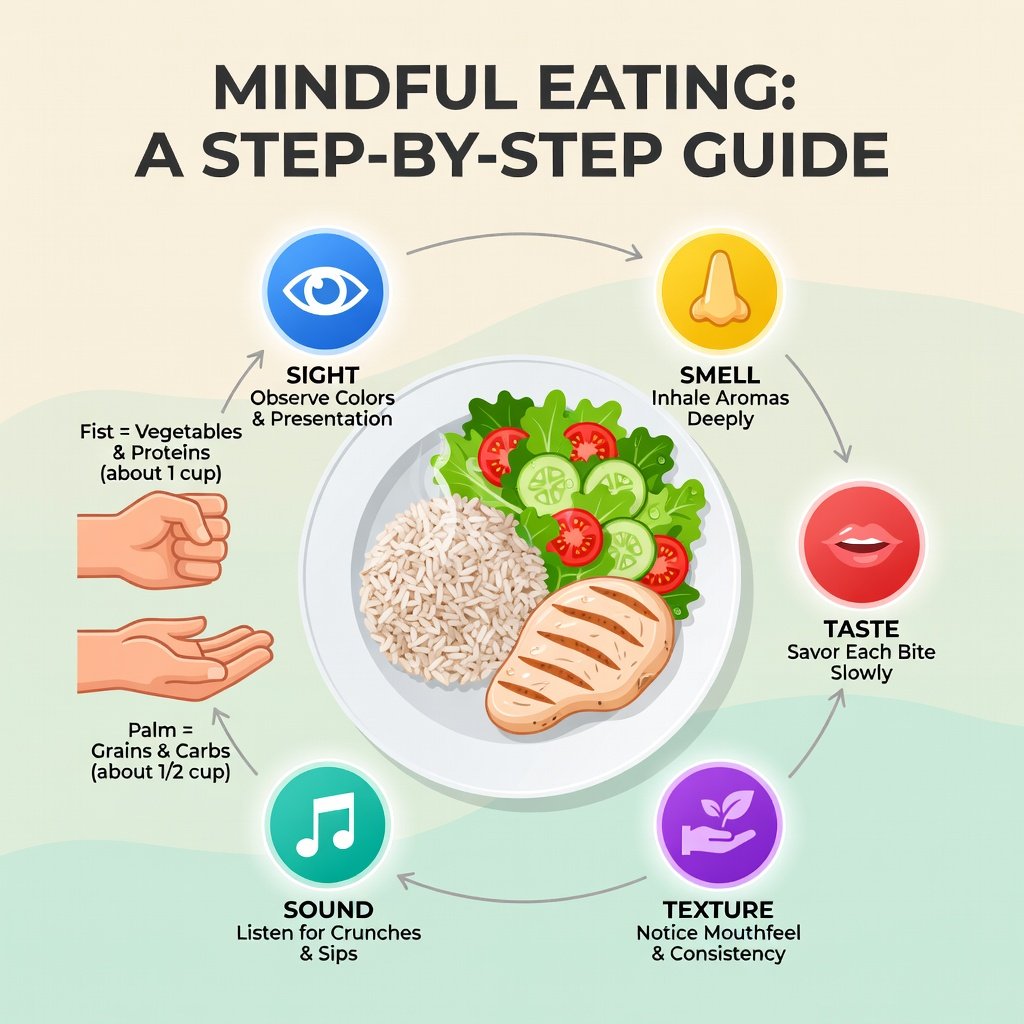
Intuitive portioning ditches measuring cups for body wisdom. Start by asking: "Am I hungry? How much do I need?" Use the hand method for rough guides—palm for proteins, fist for veggies, thumb for fats, cupped hand for carbs.
Practical Nutrition Tip
Pair with 2026 superfoods like algae-based omega-3s or fermented gut boosters. Plate half veggies first to naturally crowd out excess calories.
- Sit down without distractions.
- Assess hunger on a 1-10 scale (eat at 3-4, stop at 7).
- Serve smaller initial portions; refill mindfully if needed.
Foundational Technique 2: Sensory Meal Awareness
Engage all senses: observe colors, inhale aromas, feel textures, savor tastes. Chew slowly—aim for 20-30 chews per bite to activate digestion enzymes.
Starter Exercise: The 5-Senses Check-In
During your next meal:
- See: Note the vibrant hues.
- Smell: Breathe deeply before biting.
- Touch: Feel food's temperature and texture.
- Taste: Identify sweet, sour, salty, bitter, umami.
- Listen: To crunch or sizzle sounds.
This builds appreciation, reducing cravings for processed snacks. Integrate with hydration: sip water between bites for better satiety.
Foundational Technique 3: Daily Habit Integration
Make mindfulness routine. Start small: one mindful meal daily, then expand. Use apps for gentle reminders or journal post-meal reflections—what nourished me?
Practical Nutrition Tips for 2026
- Incorporate adaptogens like ashwagandha in smoothies for stress-reduced eating.
- Batch-prep colorful bowls with quinoa, kale, and berries for grab-and-go awareness.
- Pair with intermittent fasting windows, eating mindfully in your zone.
Link this to circadian nutrition: eat earlier for optimal energy, as supported by resources from the Mayo Clinic.
Simple Starter Exercises for Beginners
Try these 5-10 minute practices:
- Hunger-Fullness Meditation (Daily): Before meals, pause for 1 minute breathing. Rate hunger, eat slowly, rate fullness midway and end.
- Mindful Snack Audit (Weekly): Track one snack day's choices. Ask: Did it satisfy or distract?
- Gratitude Bite (Every Meal): Pause after first bite to thank your body and food sources.
Track progress in a journal. After two weeks, expect steadier energy and effortless portion control.
Overcoming Common Challenges
Busy schedules? Prep mindful meals ahead. Cravings hit? Pause and breathe—often thirst or boredom masquerades as hunger. Social settings? Lead by example with slower eating.
For sustained weight management, combine with movement like 20-minute walks post-meal to enhance digestion.
Conclusion: Your 2026 Mindful Eating Journey
Mindful eating isn't a diet—it's a lifestyle upgrade for smarter nutrition. By mastering intuitive portioning, sensory awareness, and habits, you'll manage weight, sustain energy, and enjoy food deeply. Start today with one exercise; consistency unlocks transformation. Embrace 2026's wellness wave—your plate awaits.

No comments yet. Be the first!