 Func Eats
Introduction to Optimized 15-Minute Cooking Workflows
Experienced home cooks know that speed in the kitchen does not have to mean sacrificing nutrition or flavor. Advanced workflow strategies focus on precise task sequencing, efficient multitasking, and proactive storage to consistently deliver healthy dinners in 15 minutes or less. These methods align with 2026 trends emphasizing quick, balanced meals that support busy lifestyles without compromising quality.
By rethinking traditional prep order and leveraging minimal equipment, you can shave valuable minutes from every session. This guide provides concrete examples, including full timelines for two complete meals, comparisons of methods, checklists, and answers to common questions.
Core Principles of Kitchen Task Sequencing
Effective sequencing starts before heat touches any pan. Begin by reviewing the full recipe and grouping tasks into parallel streams: one for proteins, one for vegetables, and one for sauces or grains. This prevents idle time and reduces the risk of overcooking delicate ingredients.
Always start with items that require the longest passive cooking or resting periods. For example, put water on to boil or preheat a skillet while washing and portioning produce. This overlap creates natural efficiency without added stress.
Multitasking Strategies Using Minimal Equipment
Most home kitchens contain only a few essential tools. A single sharp knife, one cutting board, a skillet, and a pot can handle nearly any 15-minute recipe when used strategically. Designate zones on the counter for raw, prepped, and finished items to avoid cross-contamination and repeated cleaning.
Multitask by combining active and passive steps. While a protein sears, use the same cutting board to finish chopping herbs or measure spices. Keep a small bowl nearby for scraps to maintain a clean workspace and reduce cleanup time later.
Smart Storage Solutions That Save Minutes
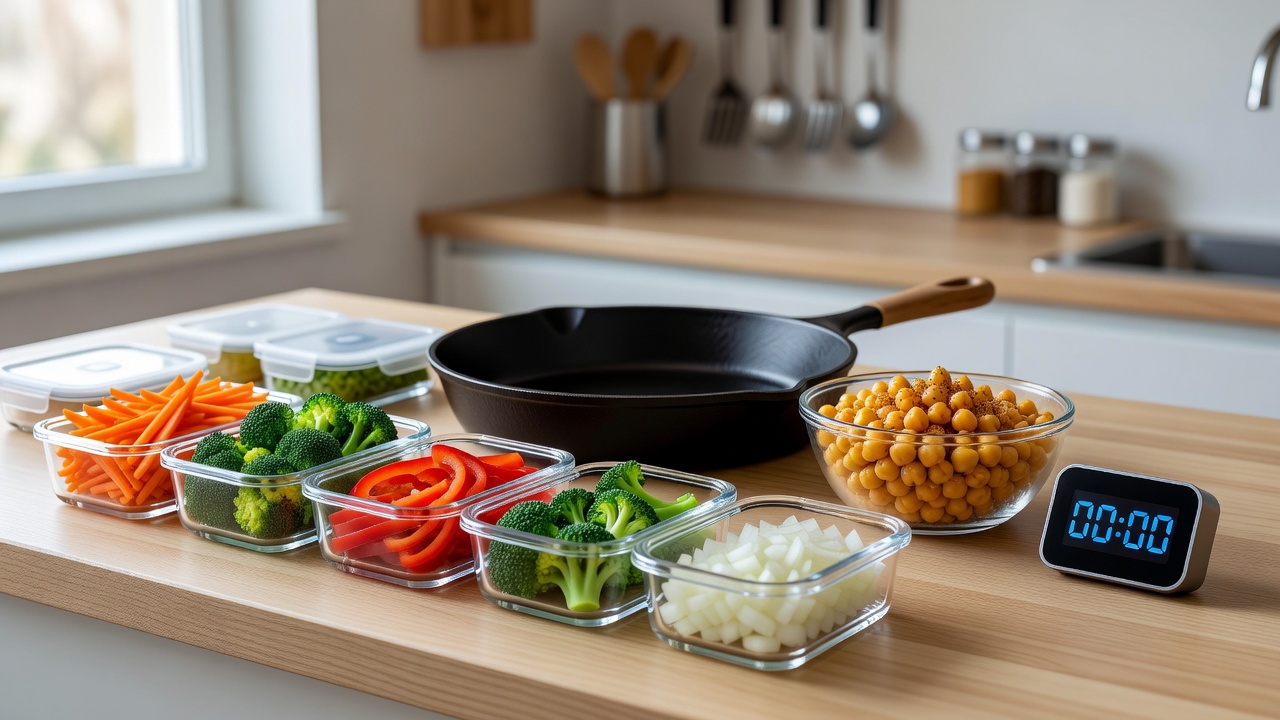
Pre-portioning ingredients at the start of the week dramatically shortens daily prep. Use clear, stackable containers labeled by meal type. Store pre-washed greens in breathable bags and pre-chopped aromatics in small lidded jars to maintain freshness.
Invest in a few high-quality reusable silicone bags for marinating proteins overnight. This step moves flavor development out of the critical 15-minute window and into passive refrigerator time.
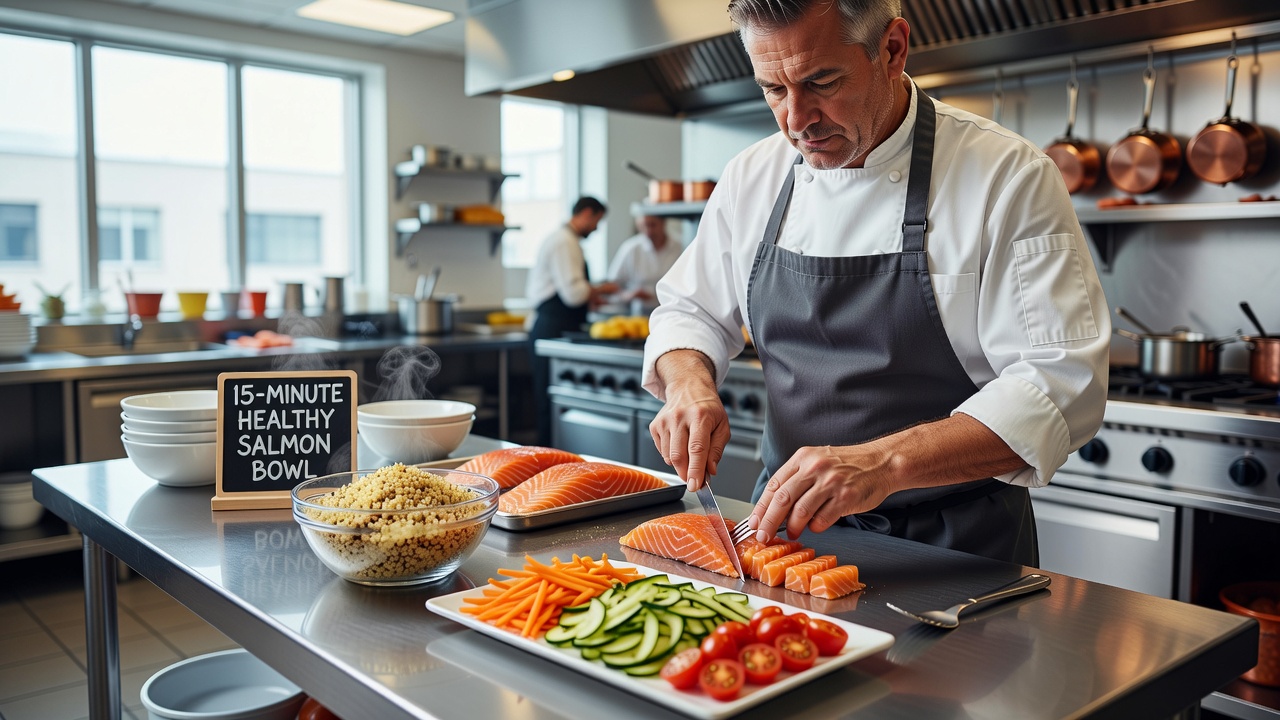
Sample Timeline: 15-Minute Lemon Garlic Salmon Bowl
Minute 0-1: Fill a medium pot with water and set to boil. Preheat a nonstick skillet over medium-high heat. Pat salmon fillet dry and season.
Minute 1-3: Place salmon skin-side down in the skillet. Simultaneously add quinoa to boiling water and set a timer for 12 minutes.
Minute 3-6: While salmon cooks, slice cucumber and cherry tomatoes directly into serving bowls. Drizzle with olive oil and lemon juice.
Minute 6-10: Flip salmon, add minced garlic and a splash of broth to the pan. Stir quinoa once, then return focus to salmon.
Minute 10-12: Remove salmon to rest. Drain quinoa and divide between bowls. Top with salmon and fresh herbs.
Minute 12-15: Finish with a quick yogurt sauce whisked in the same small bowl used earlier for seasoning. Total active time remains under 15 minutes with balanced macros.
Sample Timeline: 15-Minute Chickpea Vegetable Stir-Fry
Minute 0-2: Heat a large skillet and add a teaspoon of oil. Open and rinse canned chickpeas while the pan warms.
Minute 2-5: Add chickpeas and frozen mixed vegetables directly to the skillet. Season with garlic powder, cumin, and smoked paprika.
Minute 5-8: While vegetables sauté, whisk together a simple sauce of tahini, lemon, and water in a small bowl.
Minute 8-12: Stir sauce into the skillet. Simultaneously warm whole-grain wraps or portion pre-cooked brown rice from the refrigerator.
Minute 12-15: Plate the stir-fry over rice or inside wraps. Garnish with fresh parsley stored in a countertop herb keeper. The entire process uses only one pan and one bowl.
Common Bottlenecks and How to Avoid Them
- Overcrowding the pan: Cook in batches or use a larger skillet to maintain high heat and proper browning.
- Searching for tools mid-recipe: Keep a dedicated “15-minute station” with your most-used items within arm’s reach.
- Waiting for ingredients to thaw: Use frozen vegetables straight from the bag and choose quick-cooking proteins such as shrimp or thin-cut chicken.
- Multiple chopping sessions: Complete all knife work in one focused block before heat is applied.
Traditional Versus Optimized Method Comparison
Traditional approaches often tackle one ingredient at a time, leading to sequential downtime. Optimized workflows run three to four tasks concurrently, cutting total time by 30-40 percent while preserving the same nutritional profile. The difference becomes most noticeable when preparing meals for two or more people.
Printable Time-Saving Checklist
- Review full recipe and note passive cooking windows.
- Group ingredients by cooking method before starting.
- Preheat all equipment first.
- Prep longest-cooking items immediately after preheating.
- Use one cutting board and clean as you go.
- Store leftovers in portioned containers while food is still warm.
Frequently Asked Questions
How can I adapt these workflows for different dietary needs?
Substitute proteins and grains according to preference while maintaining the same sequencing logic. The structure remains effective for vegetarian, gluten-free, or low-carb variations.
What if I only have 10 minutes on certain evenings?
Focus on the two highest-impact overlaps: preheating equipment while portioning, and using pre-prepped ingredients from smart storage. Many recipes can be compressed further with these tactics.
Do these methods require special kitchen gadgets?
No. All strategies rely on standard equipment found in most homes. The emphasis is on process rather than tools.
Conclusion
Advanced workflow hacks transform 15-minute recipes from rushed afterthoughts into reliable, nutritious dinners. By mastering task sequencing, multitasking, and storage, experienced cooks gain consistent results that align with modern efficiency demands. Apply these timelines and checklists to your next meal and experience the difference in both speed and satisfaction.
No comments yet. Be the first!