 Func Eats
Introduction to Air Fryer Recipe Conversions
Home cooks in 2026 are increasingly turning to air fryers for quicker weeknight meals that retain flavor and texture while cutting down on oil. Converting traditional oven recipes allows you to enjoy favorites like roasted chicken or vegetable bakes in less time with fewer calories. This comprehensive guide covers essential adjustments for temperature, timing, and oil use, plus practical examples and troubleshooting for proteins, vegetables, and casseroles. Whether you are new to air frying or looking to refine your technique, these methods deliver consistent results that support healthier eating habits without sacrificing taste or satisfaction. Air fryers use rapid circulation of hot air to create a crispy exterior similar to deep frying but with dramatically less oil, making them ideal for busy families seeking efficient dinner solutions.
Key Conversion Principles: Temperature and Timing
Air fryers cook faster than ovens due to rapid hot air circulation. Reduce oven temperatures by 25°F (about 15°C) and cut cooking time by 20-30%. Always preheat the air fryer for 3-5 minutes and check food at the halfway point to avoid overcooking. Use an instant-read thermometer to ensure proteins reach safe internal temperatures, such as 165°F for chicken. Start with smaller test batches when adapting a new recipe to understand how your specific model performs. Factors like basket size, wattage, and food thickness all influence results, so note any adjustments for future reference. For thicker cuts, consider lowering the temperature slightly more to allow heat to penetrate without burning the surface.
Minimal Oil Strategies for Crispy Results
Air fryers require far less oil than ovens or deep fryers. Lightly brush or spray foods with 1-2 teaspoons of oil per serving using a high-smoke-point option like avocado oil. For breaded items, a quick mist ensures even browning without sogginess. This approach reduces fat content while maintaining crunch. Experiment with flavored oils or dry rubs to enhance taste without adding extra fat. Pat ingredients dry before applying oil to promote better adhesion and crispiness. Avoid submerging foods in oil, as excess liquid can lead to steaming instead of frying.
Converting Proteins: Step-by-Step Guidelines
Proteins like chicken, fish, and pork adapt well. For bone-in chicken thighs, reduce from 400°F oven for 35 minutes to 375°F air fryer for 22-25 minutes, flipping halfway. Marinate first for moisture retention. Fish fillets need only 8-10 minutes at 375°F after a light oil spray. When working with ground meats or meatballs, form uniform shapes and cook in a single layer, shaking the basket occasionally. Lean cuts benefit from a brief rest after cooking to redistribute juices. Always verify doneness with a thermometer rather than relying solely on time.
Vegetables and Side Dishes
Root vegetables roast beautifully. Cut uniformly for even cooking. Broccoli florets air fry in 8 minutes at 375°F versus 20 minutes in the oven. Toss with minimal seasoning and oil for caramelized edges without burning. Dense vegetables like sweet potatoes may need an extra 3-5 minutes; test tenderness with a fork. Leafy greens require shorter times and higher temperatures to achieve crisp chips rather than wilted results.
Casseroles and One-Pan Meals
Adapt casseroles by using smaller portions in air fryer-safe dishes. Reduce time significantly and stir midway. Avoid overly wet mixtures that steam rather than crisp. Layer ingredients strategically so toppings brown evenly. For dishes with cheese, add it toward the end of the cycle to prevent over-browning.
Four Practical Recipe Examples
1. Roasted Chicken Thighs
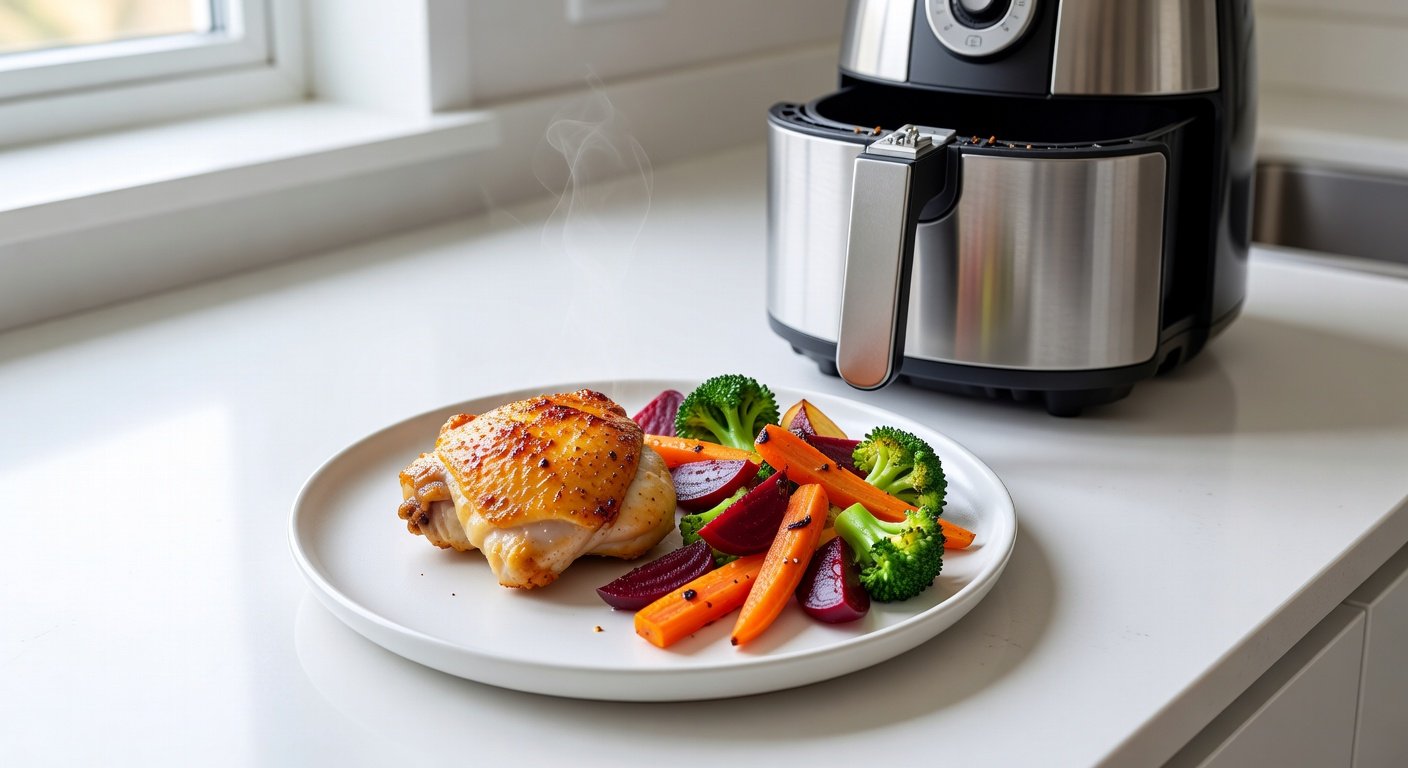
Original oven: 400°F for 35 minutes. Air fryer: 375°F for 22 minutes. Season with herbs and a light oil spray for juicy results. Begin by patting the thighs dry, then apply a simple rub of salt, pepper, garlic powder, and paprika. Place skin-side down first, flip after 11 minutes, and confirm an internal temperature of 165°F before resting for 5 minutes.
2. Veggie Bake with Potatoes and Carrots
Oven version takes 45 minutes; air fryer version finishes in 18 minutes at 380°F with one flip. Cut vegetables into similar-sized pieces, toss with a teaspoon of oil and rosemary, then arrange in a single layer. Shake the basket at the 9-minute mark for uniform browning.
3. Breaded Fish Fillets
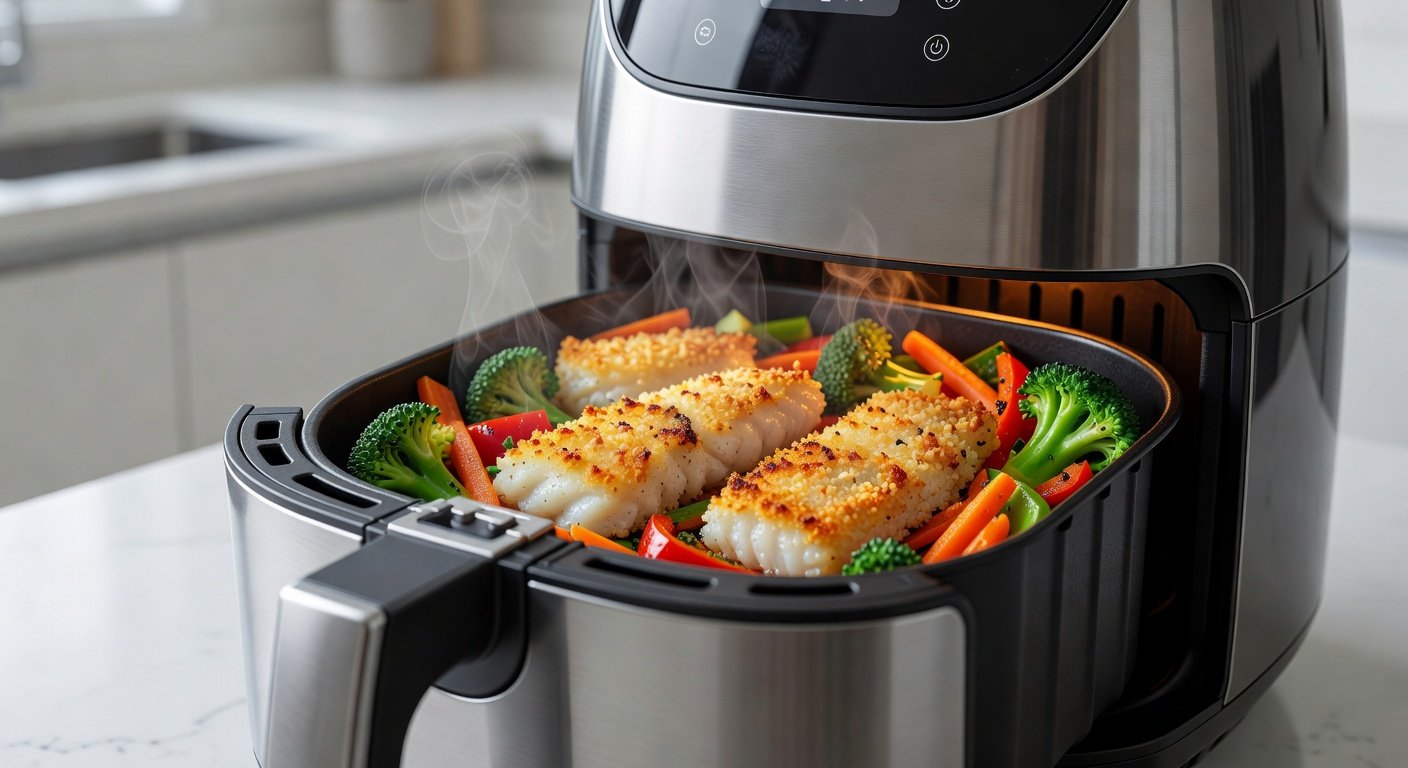
Convert 20-minute oven bake to 10 minutes at 375°F for golden, flaky fish. Coat fillets in seasoned breadcrumbs, spray lightly, and cook without overcrowding. Serve immediately with lemon wedges to preserve texture.
4. Zucchini and Tomato Casserole
Layer in a small pan and air fry at 360°F for 12 minutes, checking for bubbling cheese. Use thin slices and a light sprinkle of Parmesan for a quick, low-carb side that pairs well with grilled proteins.
Additional Tips for Success
Consider your air fryer model when converting recipes, as basket versus oven-style units can vary in cooking speed. Batch cooking works well for meal prep; cook extra portions and reheat in the air fryer for 2-3 minutes to restore crispness. Seasonings such as smoked paprika, Italian herbs, or chili flakes add depth without calories. For breading, use panko for lighter results or almond flour for lower-carb versions.
Troubleshooting Common Issues
- Uneven cooking: Shake the basket or rearrange items every 5 minutes.
- Sogginess: Pat foods dry before cooking and avoid overcrowding.
- Dry results: Add a quick marinade or spritz with oil mid-cook.
- Burning edges: Lower temperature by 10-15°F for delicate items.
- Sticking: Lightly oil the basket or use parchment liners designed for air fryers.
FAQ on Air Fryer Conversions
How do I prevent food from drying out?
Use a light coating of oil and monitor closely, especially for lean proteins. Marinating for 30 minutes beforehand helps lock in moisture.
Can I convert any oven recipe?
Most work well, but very large batches or delicate soufflés may need adjustments or smaller portions. Test one serving first.
What about safety guidelines?
Follow USDA food safety recommendations for internal temperatures and proper handling.
How often should I clean the air fryer?
Wipe the basket after each use and perform a deeper clean weekly to maintain performance and prevent odors.
Conclusion
Mastering these conversions saves time and boosts nutrition for busy households. Experiment with small batches first and enjoy healthier versions of classic oven dinners all year long. For broader healthy eating resources, explore Nutrition.gov and CDC food safety pages.
No comments yet. Be the first!