 Func Eats
One-Basket Air Fryer Dinners: The Ultimate Guide to Easy, Balanced Meals in 2026
Busy schedules in 2026 demand efficient kitchen solutions that deliver nutrition without hours of cleanup. One-basket air fryer dinners solve this by allowing complete meals—protein, vegetables, and starches—to cook together in a single appliance basket. This method reduces dishwashing time dramatically while producing balanced plates packed with flavor and essential nutrients. Air fryers work by circulating superheated air around food, creating crispy exteriors with minimal oil, making them ideal for health-conscious cooks seeking convenience.
Unlike traditional ovens that require preheating, multiple trays, and constant rotation, one-basket cooking streamlines the process from prep to plate. Home cooks report saving 20 to 30 minutes per meal compared to oven methods. The approach supports dietary goals by encouraging portion control and the inclusion of fiber-rich vegetables alongside lean proteins and whole grains.
Why One-Basket Meals Deliver Superior Results
One-basket dinners minimize waste and maximize efficiency. Everything shares the same cooking environment, allowing flavors to mingle subtly while maintaining distinct textures. This technique aligns with USDA nutrition guidelines that emphasize balanced plates containing protein, vegetables, and whole grains in appropriate proportions. Health benefits extend beyond convenience: reduced oil usage lowers calorie intake, and shorter cooking times preserve more vitamins in vegetables.
Additionally, one-basket meals reduce energy consumption. Air fryers typically use less electricity than full-size ovens for small to medium portions, supporting sustainable kitchen practices. Families appreciate the consistency—results remain repeatable once timing patterns are mastered.
Selecting the Right Air Fryer for One-Basket Cooking
Not all air fryers perform equally for mixed-ingredient meals. Look for models with 5- to 6-quart capacity or larger to accommodate family portions without overcrowding. Digital controls with precise temperature settings and shake reminders improve outcomes. Basket-style units with removable dividers offer flexibility for separating foods that require different cook times. Always verify that your model maintains even heat distribution, as cheaper versions can create hot spots that lead to uneven results.
Ingredient Compatibility and Preparation Rules
Successful one-basket meals hinge on understanding how different foods respond to heat and air flow. Dense proteins like chicken thighs require longer cooking at moderate temperatures, while delicate vegetables cook quickly. Starches such as rice or quinoa benefit from pre-cooking or thin layering to avoid underdone centers. Cut all components into uniform sizes, usually 1-inch pieces, to promote even cooking. Lightly coat with oil to promote browning but avoid excess moisture that causes steaming instead of crisping.
Practical tips include patting proteins dry with paper towels before seasoning, blanching dense vegetables like carrots briefly if pairing with faster items, and using foil packets or small ramekins for items that release liquid. Never exceed 70 percent basket capacity to allow proper air circulation.
Temperature and Timing Reference Chart
Use this chart as a starting point and adjust based on your specific appliance and ingredient starting temperatures:
- Boneless chicken breast or thighs (1-inch cubes): 375°F for 15–18 minutes
- Salmon or white fish fillets: 400°F for 10–12 minutes
- Broccoli, cauliflower, or asparagus: 375°F for 8–10 minutes
- Sweet potato or regular potato cubes: 380°F for 18–22 minutes
- Pre-cooked quinoa or rice: 350°F for 5–7 minutes to achieve crisp edges
- Shrimp or scallops: 380°F for 6–8 minutes
Always check internal temperatures with a meat thermometer—chicken should reach 165°F and fish 145°F for safety, per FDA food safety standards.
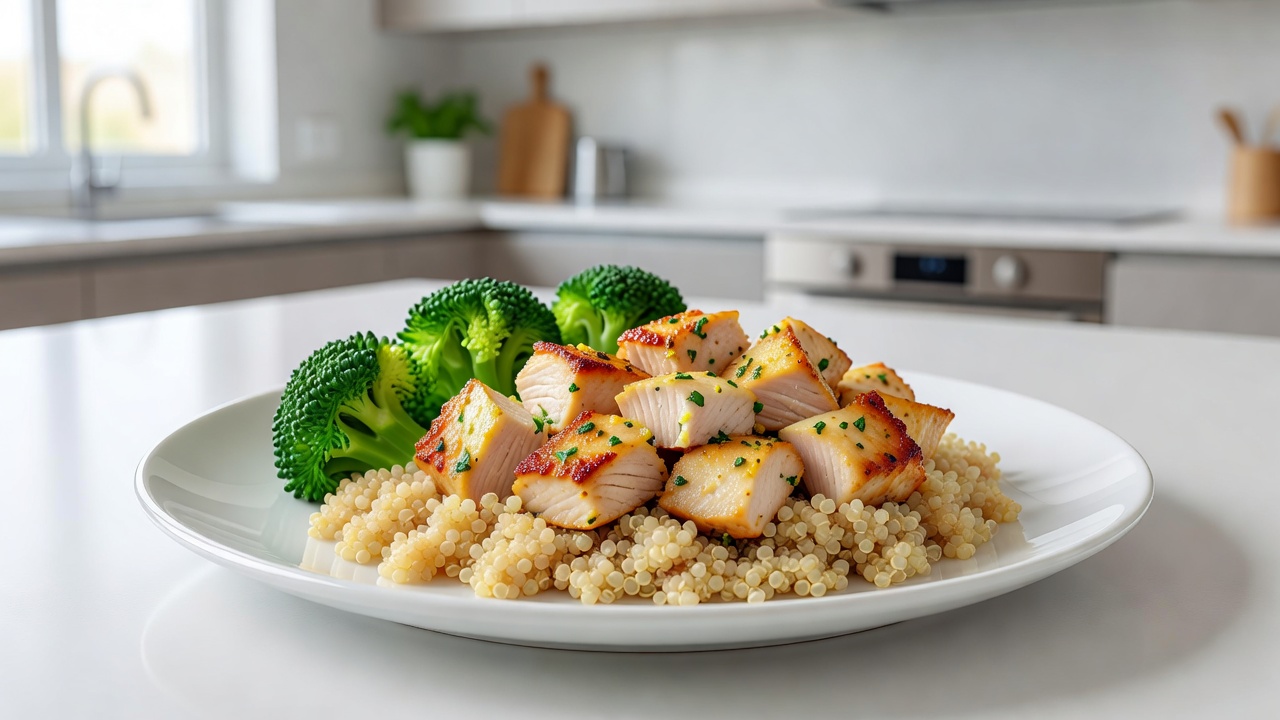
Complete Recipe: Lemon Herb Chicken with Broccoli and Quinoa
This reliable dinner serves two adults and requires under 30 minutes total.
Ingredients
- 2 medium boneless skinless chicken breasts, cut into 1-inch cubes
- 3 cups fresh broccoli florets
- 1.5 cups cooked quinoa
- 2 tablespoons olive oil, divided
- Zest and juice of one large lemon
- 2 teaspoons dried oregano
- 1 teaspoon garlic powder
- 1/2 teaspoon each salt and black pepper
Step-by-Step Instructions
- Combine chicken cubes with one tablespoon oil, half the lemon zest and juice, oregano, garlic powder, salt, and pepper in a bowl. Toss to coat and let marinate 5 minutes.
- In a separate bowl, toss broccoli with remaining oil and seasonings.
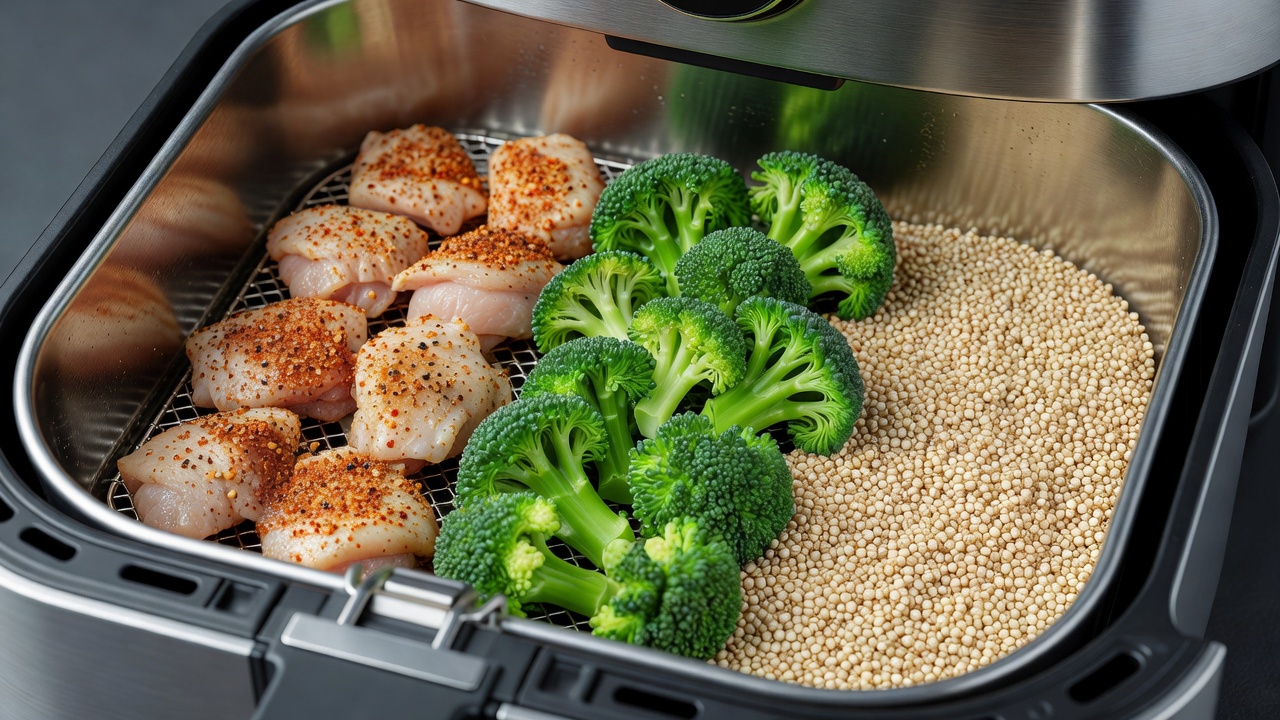
- Spread chicken on one half of the air fryer basket and broccoli on the other. Place quinoa in a thin layer or small perforated foil packet in the center.
- Set temperature to 375°F and cook for 15 minutes, shaking the basket at the 8-minute mark.
- Remove basket, let rest 2 minutes, then drizzle with remaining lemon juice before serving.
More One-Basket Recipe Examples
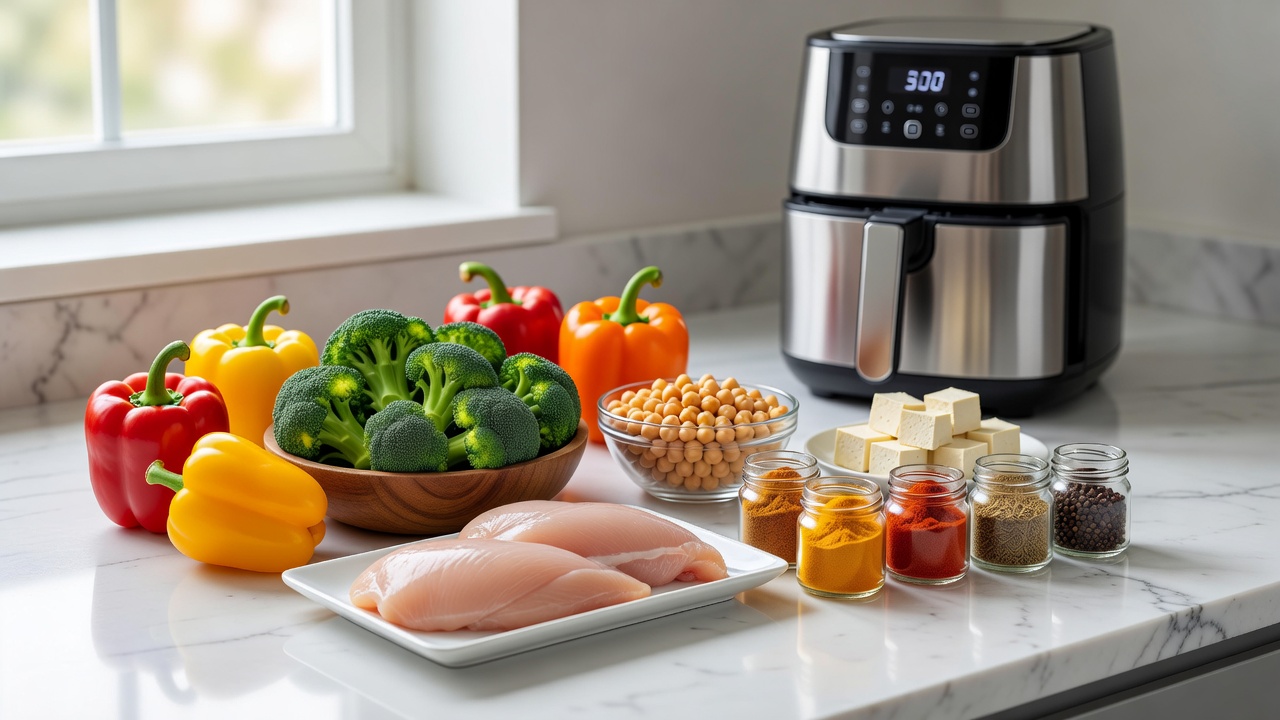
Try these variations to expand your repertoire. For a Mediterranean meal, combine seasoned turkey meatballs, zucchini slices, cherry tomatoes, and pre-cooked farro at 370°F for 14 minutes. An Asian-inspired option uses cubed tofu or chicken, snap peas, bell peppers, and brown rice tossed in a light soy-ginger sauce cooked at 380°F for 12–15 minutes. Each recipe follows the same density-based arrangement principle.
Flavor Variations and Customization Tips
Rotate seasonings to prevent menu fatigue. Swap lemon herb for smoked paprika and cumin with roasted peppers and black beans for a Southwest profile. Italian flavors work well with rosemary, thyme, and balsamic drizzle alongside eggplant and polenta. Keep moisture balanced by draining canned items thoroughly and using dry rubs rather than wet marinades when possible.
One-Basket Cooking Versus Traditional Oven Methods
Oven roasting often requires 40 minutes including preheat and multiple sheet pans. Air fryer versions complete the same meal in 20 minutes or less using one basket. Vegetables emerge crisp-tender rather than steamed, and proteins develop superior browning. Cleanup involves only one basket versus several pans and utensils.
Avoiding Common Pitfalls Like Soggy Textures
Sogginess occurs when moisture has nowhere to escape. Solutions include pre-drying all ingredients, spacing food in a single layer, and using perforated parchment liners designed for air fryers. Shake or stir every five minutes. If one component finishes early, remove it and cover loosely with foil while the rest completes cooking.
Meal Prep, Scaling, and Storage Advice
Prep ingredients the night before and store in separate containers. For families of four, use a larger basket or cook two sequential batches. Leftovers store well in airtight containers for up to three days in the refrigerator and reheat beautifully at 350°F for 4–5 minutes to restore crispness.
Frequently Asked Questions
How do I scale portions for larger families?
Use a 6-quart or larger basket. Increase cook time by 3–5 minutes when doubling ingredients while maintaining single-layer spacing.
What should I do if vegetables cook faster than protein?
Remove finished vegetables early, cover them, and return the basket with remaining items until proteins reach safe internal temperatures.
Can frozen ingredients be used directly?
Yes. Add 5–8 minutes to total time and break apart any clumps before cooking. Frozen broccoli pairs successfully with fresh chicken when arranged properly.
How can I make meals lower in carbohydrates?
Substitute cauliflower rice for quinoa and increase non-starchy vegetables while maintaining the same timing guidelines.
Conclusion
One-basket air fryer dinners transform weeknight cooking into a streamlined, nutritious experience. By mastering ingredient compatibility, timing charts, and simple assembly techniques, you can consistently produce complete meals with minimal effort and cleanup. Experiment with the recipes and variations provided to create a personalized rotation that fits your taste preferences and schedule.
No comments yet. Be the first!