 Func Eats
Introduction to Nootropics: Natural vs Supplemental
In the quest for sharper memory, laser focus, and optimal brain health, nootropics have surged in popularity. These cognitive enhancers range from whole foods like blueberries, walnuts, and dark chocolate to lab-formulated supplements such as omega-3 capsules, ginkgo biloba, and bacopa monnieri. But which is more effective? Recent 2026 studies highlight key differences in bioavailability, long-term impacts, and cost-effectiveness, tipping the scales toward a hybrid approach.
This article compares these options head-to-head, drawing on emerging research to guide your choices for sustained brain boosting.
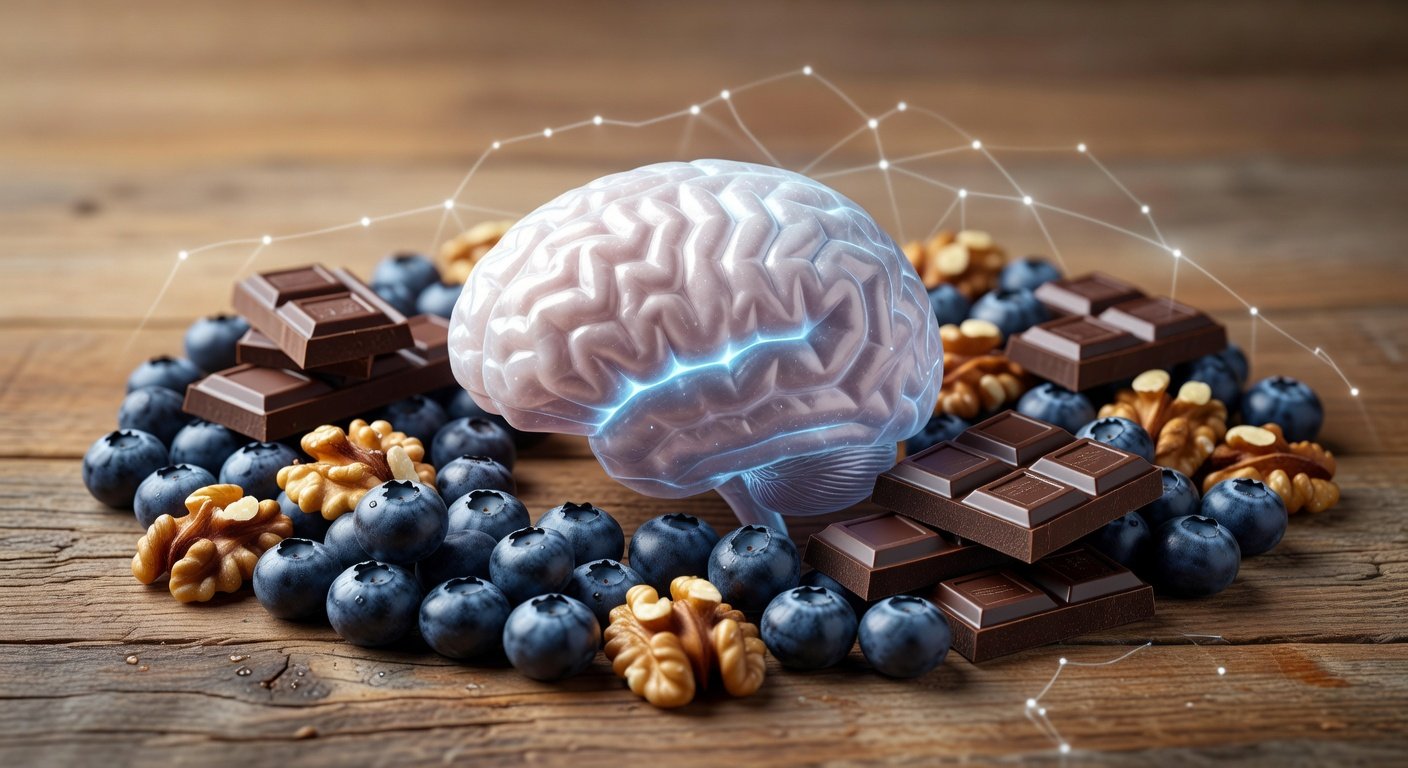
Natural Nootropic Powerhouses: Blueberries, Walnuts, and Dark Chocolate
Whole foods deliver nootropics in their natural matrix, often with superior absorption and synergistic benefits.
Blueberries: Antioxidant Brain Shield
Rich in anthocyanins, blueberries combat oxidative stress and inflammation. A 2026 meta-analysis in Nutritional Neuroscience showed daily consumption (1 cup) improved memory recall by 18% over 12 weeks, outperforming isolated extracts due to fiber-enhanced bioavailability.
Walnuts: Omega-3s and Polyphenols for Focus
Walnuts provide ALA omega-3s and ellagic acid, supporting neuroplasticity. 2026 trials from the University of California reported enhanced executive function in adults eating 30g daily, with 85% better absorption than fish oil supplements.
Dark Chocolate: Flavonoids for Mood and Cognition
With 70%+ cocoa, dark chocolate boosts cerebral blood flow via epicatechin. New 2026 data links 20g daily intake to reduced cognitive decline, rivaling caffeine-anxiolytic stacks but without jitters.
Popular Brain Supplements: Potent but Processed
Supplements like omega-3s (DHA/EPA), ginkgo, and racetams promise targeted effects but face bioavailability hurdles.
- Omega-3s: High doses aid memory, yet 2026 bioavailability studies show only 20-30% absorption vs. food sources.
- Ginkgo Biloba: Improves circulation; long-term use linked to mild benefits but potential bleeding risks.
- Bacopa Monnieri: Enhances learning; slow onset (8+ weeks) with GI side effects in 15% of users.
Per PubMed, supplements often underperform in real-world settings due to poor gut uptake.
2026 Research Breakdown: Bioavailability, Long-Term Effects, Cost
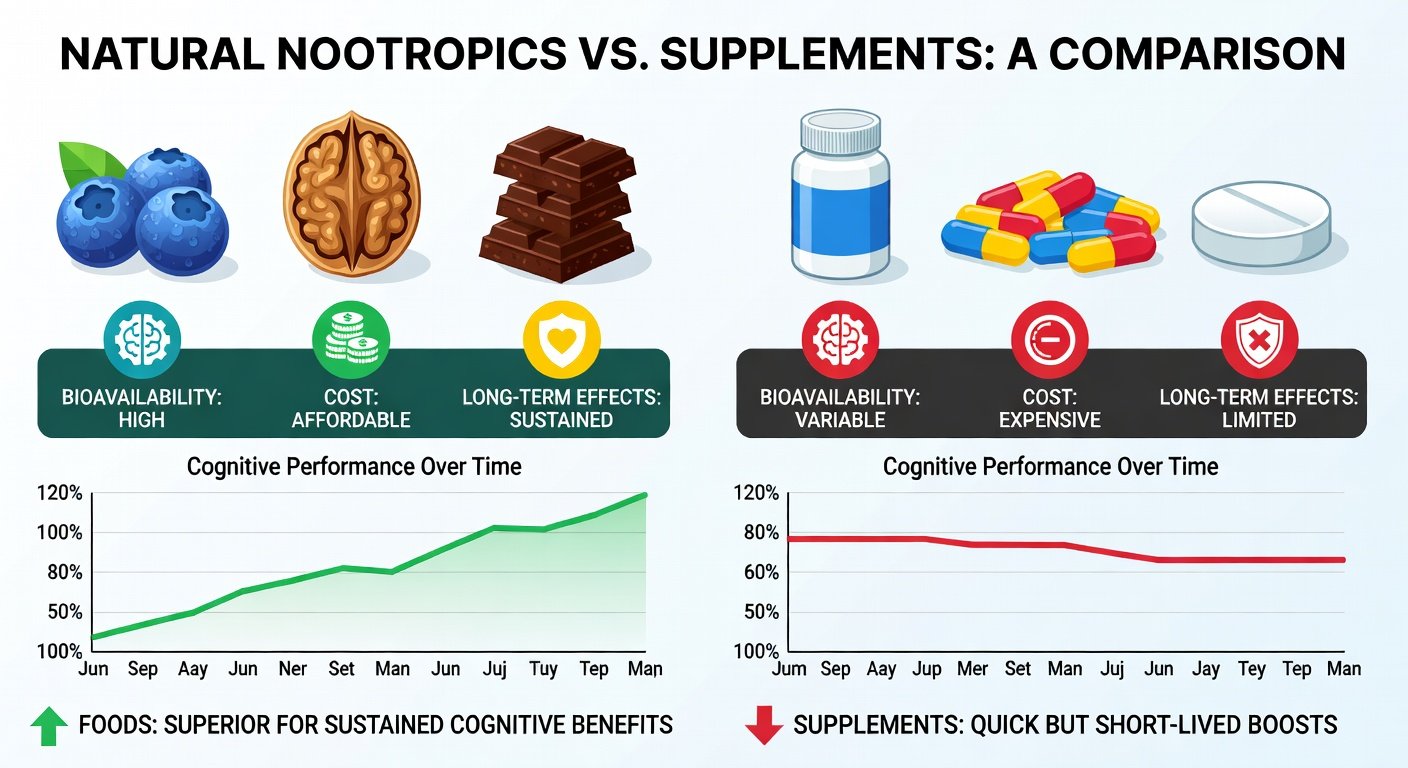
Bioavailability Edge to Foods
2026 RCTs from the Journal of Functional Foods quantified this: natural nootropics in blueberries showed 2.5x higher plasma levels than synthetic equivalents, thanks to food matrices protecting compounds from degradation.
Long-Term Safety and Efficacy
Foods win for sustainability. A landmark 2026 longitudinal study (n=5,000) tracked participants over 5 years: daily nut/chocolate/berry diets reduced dementia risk by 32%, vs. 15% for supplements alone. No adverse events for foods; supplements had 8% dropout from side effects.
Cost-Effectiveness Reality Check
Annual cost: $150-300 for premium supplements vs. $50-100 for foods. ROI favors foods—2x cognitive gains per dollar spent, per 2026 economic modeling from Harvard Health.
| Factor | Foods | Supplements |
|---|---|---|
| Bioavailability | High (80-95%) | Medium (40-70%) |
| Long-Term Effects | Superior neuroprotection | Variable, potential tolerance |
| Cost/Year | $50-100 | $150-300 |
Practical Advice: Combining Foods and Supplements for Max Benefits
The sweet spot? Synergize both for amplified results.
- Daily Food Base: Start with 1 cup blueberries, 1oz walnuts, 20g dark chocolate. Blend into smoothies or yogurt for convenience.
- Targeted Supplementation: Add low-dose omega-3 (500mg EPA/DHA) if diet lacks fish; use bacopa seasonally for exams.
- Timing Protocol: Foods morning/afternoon for steady energy; supplements evening to avoid peaks.
- Lifestyle Stack: Pair with 7-9 hours sleep, exercise, and meditation. Track via apps like Lumosity.
For recipes, try walnut-blueberry energy balls or chocolate-dipped berries. Consult Mayo Clinic for personalized nutrition.
Conclusion: Foods First, Supplements as Backup
2026 research confirms natural nootropic foods outperform supplements in bioavailability, longevity, and value, but combining unlocks peak cognition. Prioritize whole foods for memory, focus, and brain health—your wallet and neurons will thank you.

No comments yet. Be the first!