 Func Eats
Introduction: High-Protein Meals Without Fresh Shopping
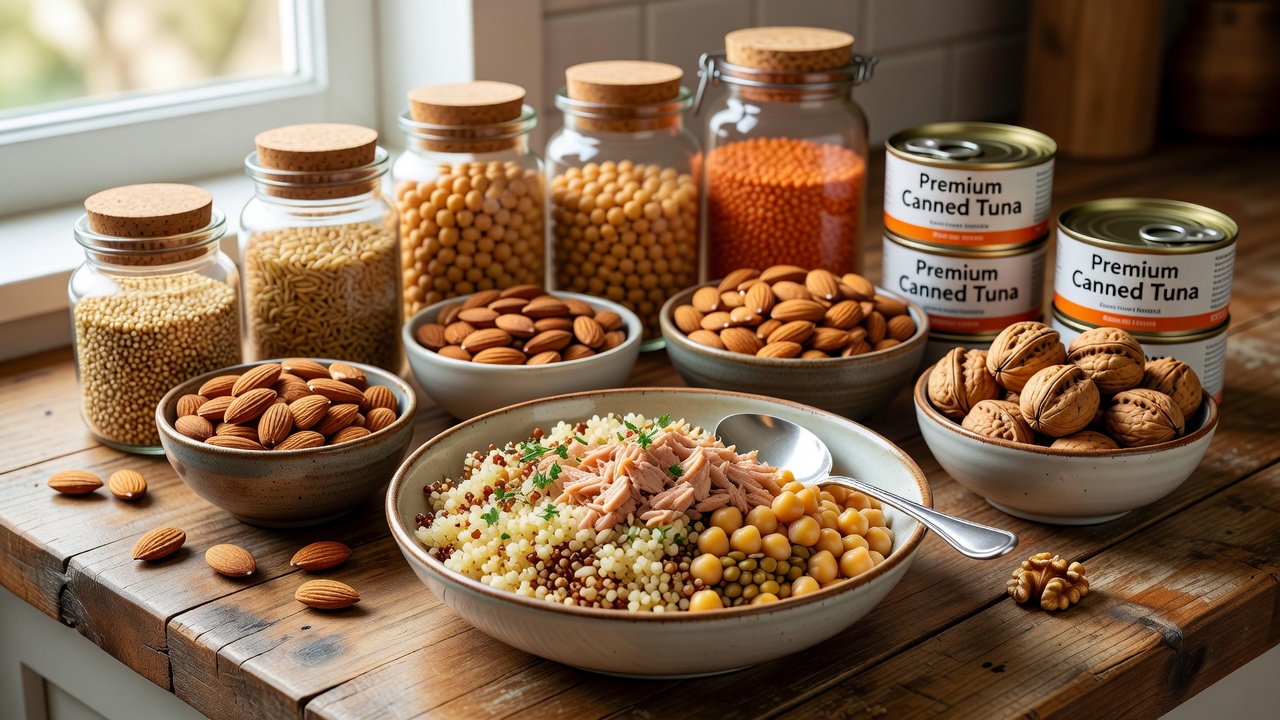
Busy schedules often make grocery runs impractical, yet meeting daily protein goals remains essential for energy, muscle maintenance, and satiety. This guide shows how to assemble high-protein meals exclusively from pantry staples like canned beans, tuna, lentils, nuts, and shelf-stable grains. No fresh produce required—just open, combine, and eat in under 15 minutes. These methods align perfectly with high-protein dinner searches while emphasizing accessibility for busy weeknights and families seeking reliable nutrition without extra shopping trips.
Protein plays a central role in supporting immune function, repairing tissues, and keeping hunger at bay. According to the World Health Organization, adults generally need around 0.8 grams of protein per kilogram of body weight daily, with higher intakes beneficial for active individuals. By focusing on shelf-stable items, you can consistently hit these targets even when fresh ingredients are unavailable.
Step-by-Step Framework for Combining Pantry Staples
Follow this repeatable process to create balanced plates every time. The framework is designed for beginners and scales easily for different household sizes.
- Choose your protein base (canned tuna, beans, or lentils provide 15–25g per serving). Start here because it delivers the bulk of your macros quickly.
- Add a grain for sustained energy (quinoa, rice, or oats add fiber and volume). This step prevents meals from feeling too light while extending satiety.
- Incorporate nuts or seeds for healthy fats and extra protein density. A small handful boosts both nutrition and texture without adding prep time.
- Layer seasonings from your spice rack or shelf-stable condiments. This is where flavor customization happens in under a minute.
- Scale portions based on household size using simple ratios. Double or triple ingredients as needed and store extras for later use.
This approach ensures each meal hits at least 25–35g of protein while staying under 10 minutes of active prep. Practice the sequence a few times and it becomes second nature for weeknight efficiency.
Five Example Recipes with Exact Macros
Here are five ready-to-assemble meals. Macros are approximate per serving and calculated from standard USDA data for drained canned items and dry-to-cooked grains. Each recipe includes optional variations for added flexibility.
1. Tuna Chickpea Bowl
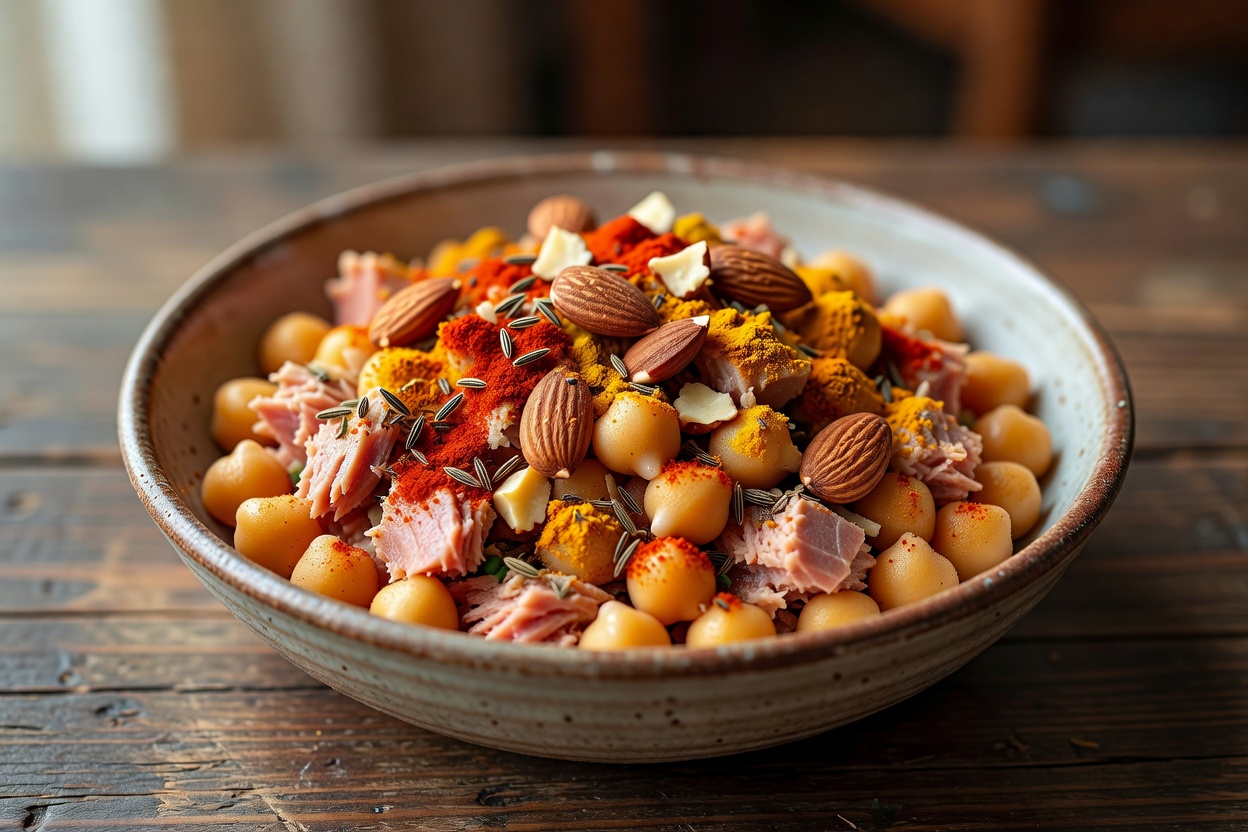
1 can tuna (drained), 1 can chickpeas (rinsed), 2 tbsp almonds, 1 tsp olive oil, cumin, and pepper. Mix and serve. Protein: 38g | Carbs: 32g | Fat: 14g | Calories: 410. Variation: Swap almonds for pumpkin seeds for a different crunch and slightly higher magnesium content.
2. Lentil Quinoa Salad
1 cup cooked lentils, ¾ cup cooked quinoa, ¼ cup walnuts, dried oregano, and lemon juice from concentrate. Protein: 29g | Carbs: 48g | Fat: 12g | Calories: 390. Variation: Add a teaspoon of dried basil for an Italian-inspired twist.
3. Black Bean Rice Skillet
1 can black beans, 1 cup cooked brown rice, 3 tbsp pumpkin seeds, chili powder, and garlic powder. Protein: 27g | Carbs: 55g | Fat: 10g | Calories: 400. Variation: Use white rice if brown is unavailable and increase pumpkin seeds for extra protein.
4. Nutty Couscous Tuna Mix
1 can tuna, 1 cup cooked couscous, 2 tbsp mixed nuts, Italian seasoning. Protein: 35g | Carbs: 38g | Fat: 13g | Calories: 395. Variation: Substitute couscous with farro for a nuttier flavor profile.
5. Three-Bean Power Plate
Equal parts kidney, pinto, and white beans (total 1½ cups), ½ cup cooked farro, ¼ cup peanuts, smoked paprika. Protein: 32g | Carbs: 52g | Fat: 11g | Calories: 415. Variation: Include a tablespoon of sunflower seeds for added vitamin E.
Protein Density Comparison of Common Pantry Items
Understanding protein per gram helps prioritize items during restocking. The following list ranks popular pantry staples based on protein content per 100g serving using data from reliable sources such as the USDA.
- Canned tuna (in water): 25g protein per 100g drained — ideal for maximum density in minimal volume.
- Lentils (dry): 25g per 100g — excellent for bulk cooking and long-term storage.
- Peanuts: 26g per 100g — affordable and versatile for snacking or mixing.
- Almonds: 21g per 100g — provide healthy fats alongside protein.
- Chickpeas (canned, drained): 9g per 100g — lower density but pair well with other items.
- Quinoa (dry): 14g per 100g — offers complete protein with all essential amino acids.
- Oats (dry): 13g per 100g — great for breakfast-style meals or thickening soups.
- Peanut butter (natural): 25g per 100g — convenient spreadable option for quick additions.
Tuna and lentils consistently rank highest for quick, dense protein without added bulk. Use this comparison when planning future pantry restocks to maximize nutritional return on limited storage space.
Flavor Boosting Tips Without Extra Time
Enhance taste using pantry seasonings: cumin and smoked paprika add depth to beans; mustard powder brightens tuna; cinnamon pairs well with nuts in grain bowls. Combine two spices per meal for variety. Shelf-stable hot sauce or vinegar provides brightness in seconds. For example, a dash of garlic powder and oregano transforms basic beans into a Mediterranean-style dish, while chili powder and cumin create a Tex-Mex profile. Experiment with small amounts first to avoid overpowering the base ingredients.
Common Mistakes to Avoid
Many beginners overlook simple pitfalls that affect both nutrition and enjoyment. Skipping the rinsing step for canned beans can leave excess sodium. Under-seasoning leads to bland results, so always taste and adjust. Over-relying on one protein source reduces dietary variety and potential nutrient diversity. Finally, forgetting to label opened cans can cause waste—always note the date when refrigerating leftovers.
Beginner-Friendly Checklist
- Stock at least three protein sources (tuna, beans, lentils)
- Keep two grain options on hand
- Maintain a variety of nuts/seeds for texture
- Store spices in easy-reach containers
- Label canned goods by purchase date for rotation
- Keep a small measuring cup dedicated to pantry meal prep
- Review macros weekly to ensure consistent protein intake
FAQs: Storage and Scaling Portions
How long do opened canned items last? Refrigerate drained beans or tuna in airtight containers for up to 4 days.
Can recipes be doubled? Yes—simply multiply ingredients and store extras in the fridge for quick reheating.
Are these meals suitable for meal prep? All five recipes hold well for 3–4 days when kept chilled.
What if I have dietary restrictions? Most recipes adapt easily by swapping beans for lentils or omitting nuts if allergies exist.
How do I scale for a single person versus a family of four? Use the ratio method: prepare base amounts for one and multiply accordingly while storing portions separately.
Can I heat these meals? Yes—most improve with gentle warming, though cold versions work well for lunches on the go.
Conclusion
High-protein meals from pantry staples prove that convenience and nutrition coexist. By mastering the framework, experimenting with the recipes, and applying the density comparisons, you can confidently prepare satisfying dinners any night of the week. Start with one recipe tonight and build your rotation from there. Consistent use of these methods supports long-term healthy eating habits even during hectic periods.
No comments yet. Be the first!