 Func Eats

Unlocking Hormone Balance Through Targeted Nutrition
Hormonal imbalances affect millions worldwide, leading to symptoms like fatigue, weight gain, mood swings, and irregular cycles. Conditions such as Polycystic Ovary Syndrome (PCOS), menopause, and thyroid disorders disrupt daily life, but specialized nutrition offers a powerful path to regulation. Goal-based eating tailors your diet to specific hormonal needs, incorporating key nutrients like adaptogens, omega-3 fatty acids, and phytoestrogens. This approach not only addresses root causes but also empowers you to build sustainable custom plans. In this guide, we'll explore strategies, sample menus, and emerging 2026 tools like wearable hormone trackers.
Understanding Key Hormonal Challenges
PCOS impacts 1 in 10 women of reproductive age, causing insulin resistance and elevated androgens. Menopause brings estrogen decline, leading to hot flashes and bone loss. Thyroid imbalances, like hypothyroidism, slow metabolism due to low thyroid hormones. Nutrition intervenes by supporting endocrine function. For reliable insights, consult resources from the Mayo Clinic.
PCOS: Tackling Insulin and Androgens
Focus on low-glycemic foods to stabilize blood sugar and reduce insulin spikes.
Menopause: Estrogen Support
Phytoestrogens mimic estrogen, easing symptoms.
Thyroid Issues: Iodine and Selenium Boost
These minerals are vital for thyroid hormone production.
Core Nutrients for Hormone Regulation
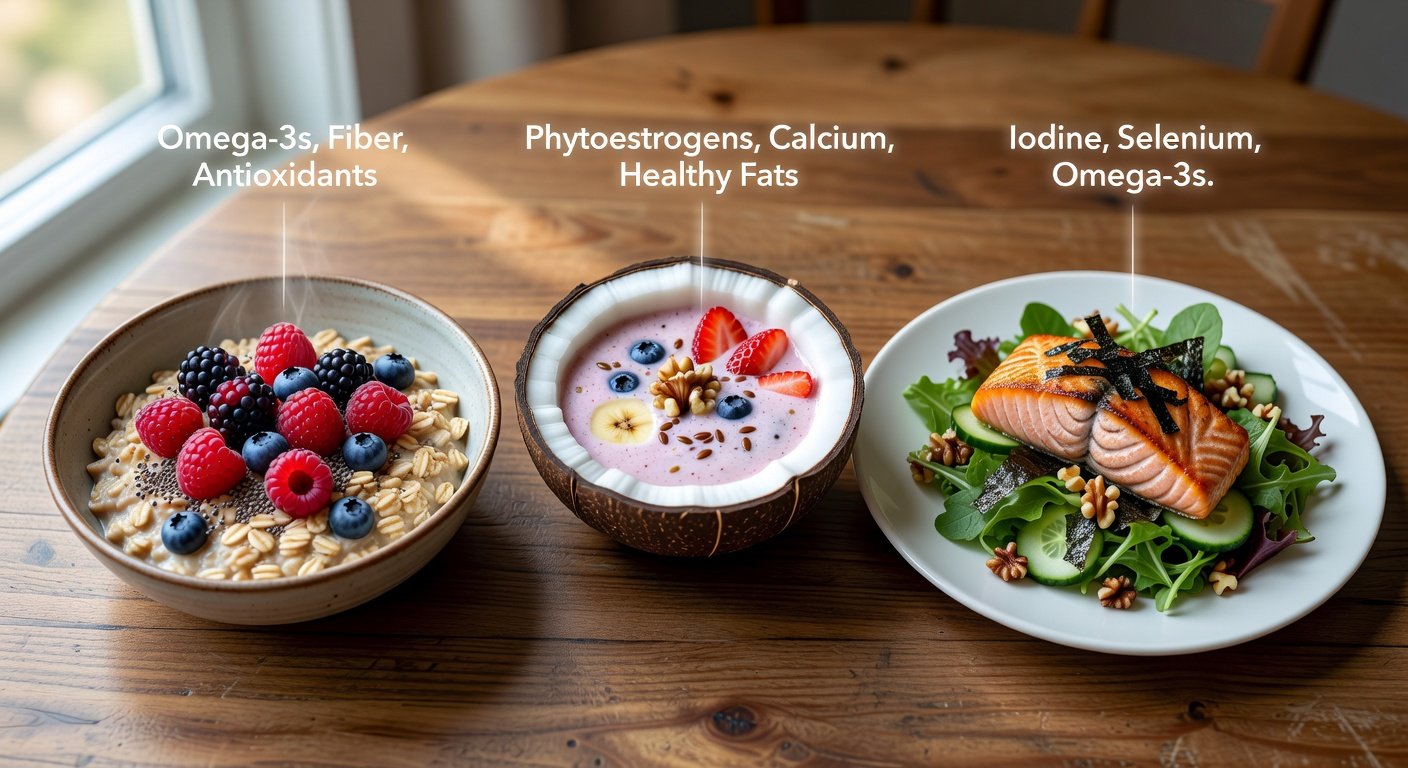
Build your plan around these powerhouse elements:
- Adaptogens: Herbs like ashwagandha and rhodiola reduce cortisol stress. Found in teas, supplements, or foods like holy basil.
- Omega-3 Fatty Acids: Anti-inflammatory; sourced from fatty fish, flaxseeds, chia. They lower inflammation linked to hormonal chaos. The NIH Office of Dietary Supplements details their benefits.
- Phytoestrogens: Plant compounds in soy, flax, sesame. Ideal for estrogen modulation in menopause and PCOS.
Incorporate cruciferous veggies (broccoli, kale) for detoxification, fiber-rich grains for gut health, and healthy fats for hormone synthesis.
Building Your Custom Nutrition Plan
Step 1: Assess your goals—PCOS (insulin focus), menopause (estrogen), thyroid (metabolism).
Step 2: Calculate macros—40% complex carbs, 30% proteins, 30% fats.
Step 3: Prioritize whole foods; limit processed sugars.
Step 4: Track with apps or journals.
Step 5: Adjust based on symptoms.
For PCOS: Emphasize spearmint tea (anti-androgen) and cinnamon for insulin sensitivity.
Menopause: Black cohosh and flax for hot flash relief.
Thyroid: Brazil nuts for selenium, seaweed for iodine—but avoid excess.
Sample Daily Menus for Each Condition
PCOS Daily Menu (≈1800 calories)
- Breakfast: Overnight oats with chia seeds, berries, almond butter, cinnamon (omega-3s, low-GI).
- Snack: Greek yogurt with flaxseeds and walnuts.
- Lunch: Grilled salmon salad with quinoa, spinach, avocado (omega-3s, phytoestrogens).
- Snack: Apple with spearmint tea.
- Dinner: Stir-fried tofu, broccoli, brown rice (adaptogens via herbs).
- Evening: Ashwagandha tea.
Menopause Daily Menu (≈1700 calories)
- Breakfast: Smoothie with soy milk, flax, spinach, banana, rhodiola powder.
- Snack: Handful of sesame seeds and edamame.
- Lunch: Lentil soup with kale and tempeh (phytoestrogens).
- Snack: Pear with almond butter.
- Dinner: Baked mackerel, sweet potato, Brussels sprouts (omega-3s).
- Evening: Holy basil infusion.
Thyroid-Balancing Daily Menu (≈1600 calories)
- Breakfast: Eggs with seaweed salad, Brazil nuts.
- Snack: Yogurt with pumpkin seeds (selenium).
- Lunch: Turkey stir-fry with zucchini, quinoa.
- Snack: Carrot sticks with hummus.
- Dinner: Cod fish, asparagus, wild rice (iodine, fiber).
- Evening: Ginger tea with turmeric (anti-inflammatory).
These menus are flexible—swap proteins for vegan options. Hydrate with 2-3 liters water daily.
2026 Tools: Wearable Hormone Trackers Revolutionize Diets
By 2026, wearables like advanced Oura rings or Apple Watch evolutions will monitor cortisol, estrogen, progesterone, and thyroid markers in real-time via sweat analysis and AI algorithms. Pair data with apps for auto-adjusting meal suggestions. Imagine your tracker alerting: "Low progesterone detected—add more flax today." Early prototypes from companies like Levels Health hint at this future. For thyroid specifics, check NIDDK.
Potential Pitfalls and Pro Tips
- Avoid goitrogens (raw cruciferous) if hypothyroid—cook them.
- Test hormone levels via bloodwork first.
- Combine with exercise: Yoga for stress, HIIT for insulin.
- Consult a doctor or RD before major changes, especially with meds.
Conclusion: Empower Your Hormones Today
Goal-based eating transforms hormonal health from reactive to proactive. Start with one nutrient focus, build your menu, and watch symptoms fade. With 2026 tech on the horizon, precision nutrition is evolving fast. Commit to consistency for lasting balance.
No comments yet. Be the first!