 Func Eats
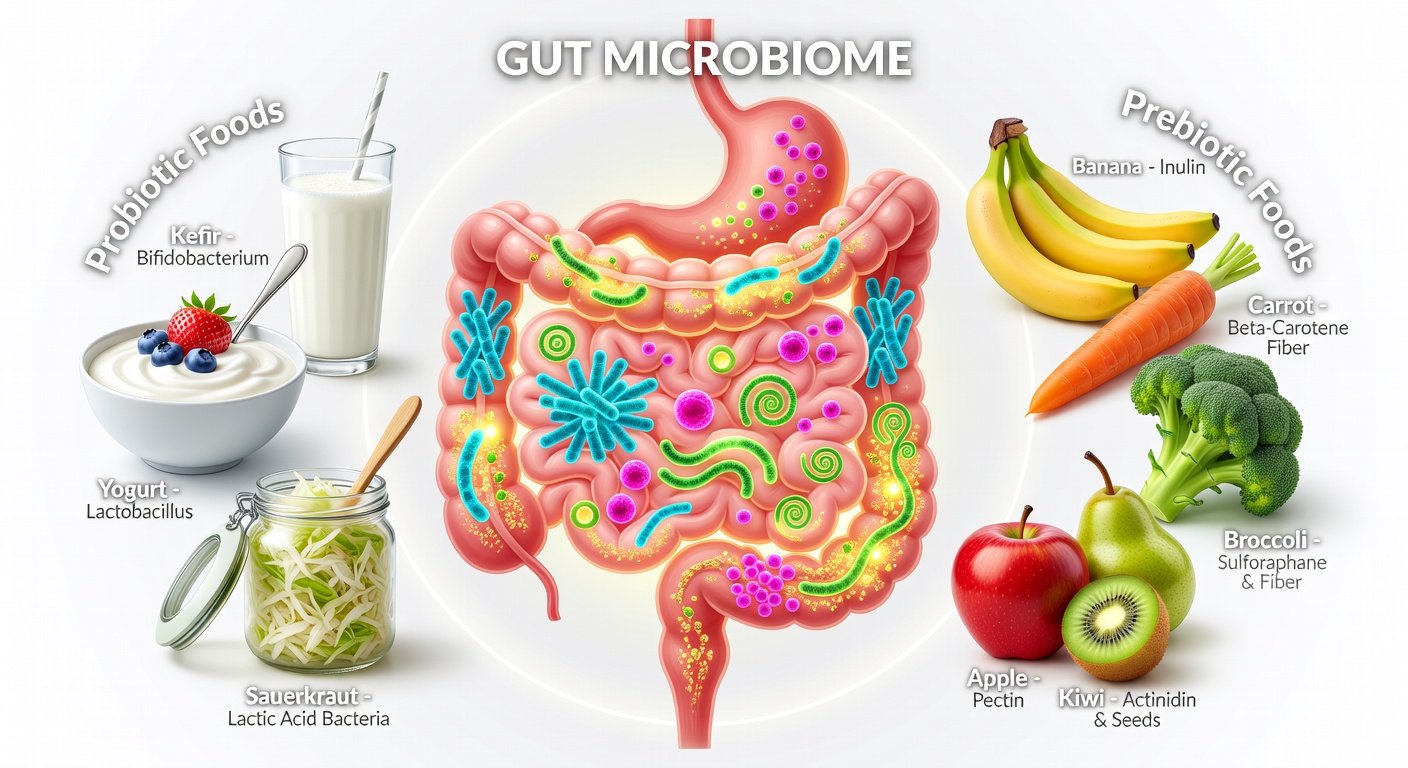
Unlocking the Power of Your Gut Microbiome
The gut microbiome, a vast community of trillions of microorganisms in your digestive tract, plays a pivotal role in digestion, immunity, and overall wellness. Specialized nutrition strategies using goal-based eating can optimize this ecosystem, leading to better nutrient absorption, reduced inflammation, and enhanced vitality. Recent studies, including forward-looking research from 2023-2026, highlight how targeted diets rich in probiotics and fiber transform gut health.
By focusing on personalized plans, you can address specific goals like improved digestion or weight management. This article provides a step-by-step guide to crafting your custom nutrition plan, complete with probiotic-rich foods, daily fiber targets, and a practical 7-day meal template.
Key Benefits of Gut Microbiome Optimization
Optimizing your gut microbiome yields profound benefits:
- Enhanced Digestion: Balanced bacteria break down food more efficiently, reducing bloating and irregularity.
- Reduced Inflammation: Diverse microbiomes produce anti-inflammatory compounds, lowering risks of chronic conditions.
- Improved Nutrient Absorption: Healthy guts extract vitamins and minerals better, boosting energy and immunity.
- Better Mental Health: The gut-brain axis links microbiome health to mood and cognition.
- Weight Management: Fiber and probiotics regulate appetite hormones.
For in-depth science, explore resources from the National Institute of Diabetes and Digestive and Kidney Diseases (NIDDK).
Understanding Goal-Based Eating for Gut Health
Goal-based eating tailors nutrition to outcomes like microbiome diversity. It emphasizes prebiotics (fiber that feeds good bacteria), probiotics (live beneficial microbes), and postbiotics (their byproducts). Aim for 25-38 grams of fiber daily—women target 25g, men 38g—while incorporating 10-20 billion CFUs of probiotics from food sources.
2026 projections from microbiome research underscore the need for diversity: rotate food types to foster 1,000+ bacterial species for optimal function.
Step-by-Step Guide to Crafting Your Custom Nutrition Plan
- Assess Your Current Gut Health: Track symptoms like bloating or fatigue for a week. Use a food diary app to log intake and note fiber/probiotic sources.
- Set Specific Goals: E.g., "Increase fiber by 10g daily" or "Add probiotics 3x/week." Make them SMART (Specific, Measurable, Achievable, Relevant, Time-bound).
- Calculate Fiber Targets: Use tools like Cronometer. Prioritize soluble fiber (oats, beans) for microbiome feeding and insoluble (veggies) for motility.
- Incorporate Probiotic Foods: Start with 1-2 servings daily, building tolerance to avoid gas.
- Balance with Prebiotics: Foods like garlic, onions, and bananas provide fuel.
- Monitor and Adjust: Reassess after 2 weeks; tweak based on energy and digestion.
- Hydrate and Move: 8-10 glasses of water and 30 minutes daily activity support motility.
Harvard's Nutrition Source offers excellent guidance on fiber intake.
Top Probiotic-Rich Foods to Include
Food is the best probiotic source—live cultures survive digestion better than many supplements.
- Yogurt (Greek or skyr, plain, full-fat)
- Kefir (fermented milk drink)
- Sauerkraut (unpasteurized)
- Kimchi (spicy fermented cabbage)
- Miso (fermented soybean paste)
- Kombucha (low-sugar varieties)
- Tempeh (fermented soy)
Start with small portions to build microbiome resilience.
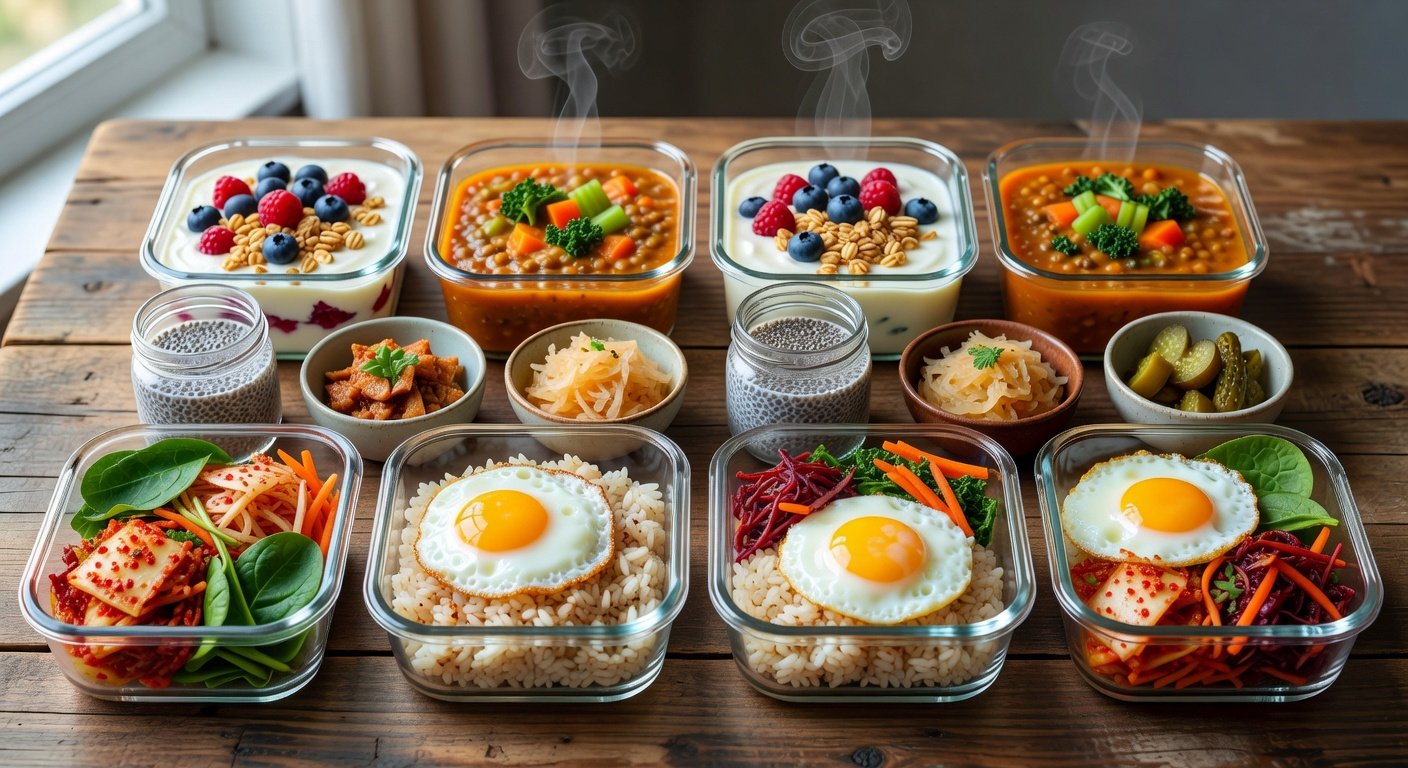
Fiber Targets: Prebiotic Powerhouses
Prebiotics are non-digestible fibers that nourish beneficial bacteria. Key targets:
- Daily Goal: 25-38g total fiber.
- Sources: Chia seeds (10g/tbsp), lentils (15g/cup), apples (4g each), broccoli (5g/cup).
- Pro Tip: Gradually increase to prevent discomfort; pair with water.
Studies show 30g+ fiber daily boosts microbiome diversity by 20-30%.
7-Day Gut-Optimizing Meal Template
This 1,800-calorie plan (adjust as needed) hits 30g+ fiber, multiple probiotics, and balanced macros. Focus on whole foods; prep in advance.
Day 1: Focus on Ferments
- Breakfast: Greek yogurt parfait with chia seeds, berries (fiber: 12g).
- Lunch: Lentil soup with sauerkraut side (fiber: 15g).
- Dinner: Grilled salmon, quinoa, broccoli (fiber: 10g).
- Snack: Kefir smoothie.
Day 2: Bean Boost
- Breakfast: Overnight oats with kefir, banana (fiber: 11g).
- Lunch: Chickpea salad with kimchi (fiber: 14g).
- Dinner: Tempeh stir-fry with greens (fiber: 12g).
- Snack: Apple with almond butter.
Day 3: Veggie Heavy
- Breakfast: Smoothie with yogurt, spinach, flaxseeds (fiber: 10g).
- Lunch: Quinoa bowl with miso dressing, veggies (fiber: 16g).
- Dinner: Baked chicken, sweet potato, Brussels sprouts (fiber: 11g).
- Snack: Kombucha.
Day 4: Nutty & Seedy
- Breakfast: Chia pudding with yogurt (fiber: 13g).
- Lunch: Black bean wrap with sauerkraut (fiber: 15g).
- Dinner: Tofu curry with brown rice (fiber: 12g).
- Snack: Pear.
Day 5: Fruit Forward
- Breakfast: Kefir bowl with oats, kiwi (fiber: 12g).
- Lunch: Hummus plate with veggies, kimchi (fiber: 14g).
- Dinner: Turkey chili with beans (fiber: 13g).
- Snack: Handful of nuts.
Day 6: Seafood Day
- Breakfast: Yogurt with granola, raspberries (fiber: 11g).
- Lunch: Tuna salad with fermented pickles (fiber: 10g).
- Dinner: Shrimp stir-fry with barley, asparagus (fiber: 14g).
- Snack: Banana.
Day 7: Reset & Rotate
- Breakfast: Smoothie bowl with tempeh bits (fiber: 12g).
- Lunch: Veggie soup with miso (fiber: 15g).
- Dinner: Eggplant parmesan with whole-grain pasta (fiber: 11g).
- Snack: Sauerkraut & cheese.
Total weekly fiber: 200g+. Customize for preferences; consult a doctor for conditions.
The World Health Organization emphasizes microbiome's role in health—check WHO resources for global insights.
Sustaining Long-Term Gut Wellness
Consistency is key. Rotate foods seasonally, manage stress (it disrupts bacteria), and consider periodic fasting windows. Track progress with stool tests if advanced. Within weeks, expect clearer skin, steady energy, and robust digestion. Goal-based eating isn't a diet—it's a lifestyle for thriving microbiomes and peak wellness.

No comments yet. Be the first!