 Func Eats
Introduction to Air Fryer Convection for Healthy 2026 Meals
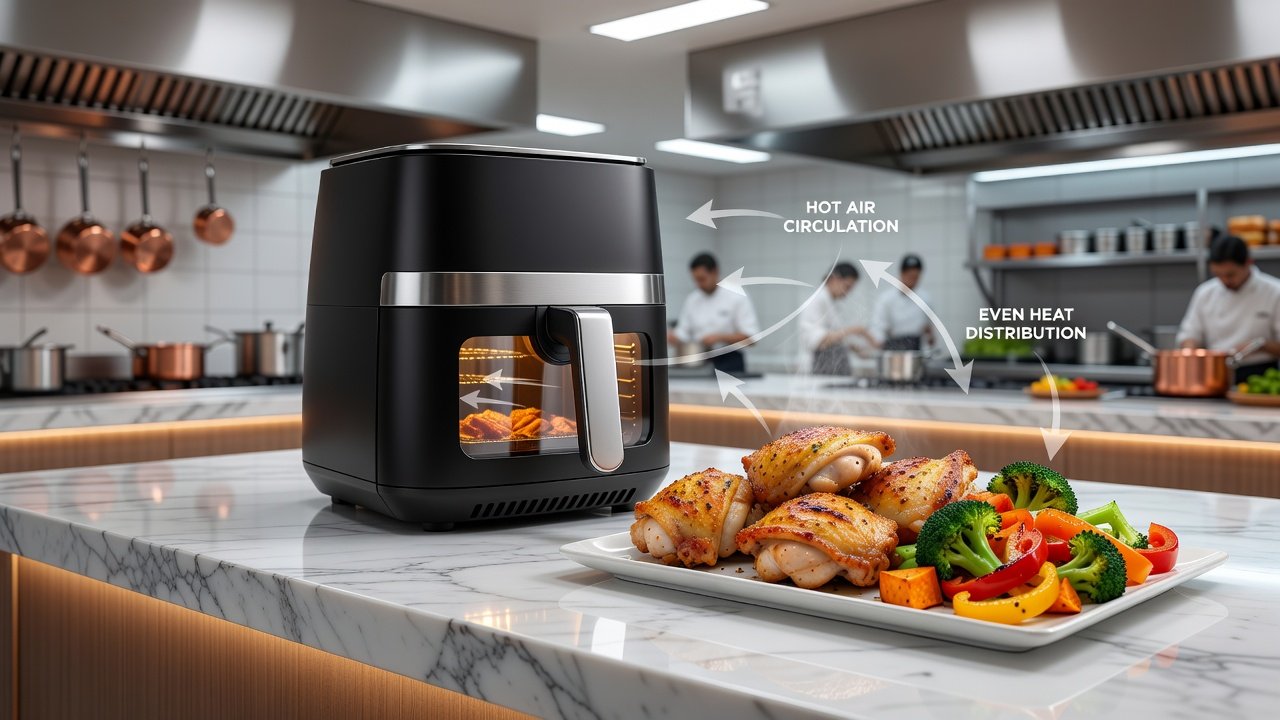
Busy home cooks in 2026 increasingly turn to air fryers for dinners that deliver restaurant-style crispiness with far less oil. The core advantage lies in convection science, where rapid air circulation creates a Maillard reaction on food surfaces while preserving nutrients and slashing calories. This method supports health-focused eating by minimizing added fats without sacrificing texture or flavor. Whether preparing chicken, fish, or roasted vegetables, understanding the physics behind air frying helps optimize results for maximum nutrition and satisfaction.
Understanding Convection Physics in Air Fryers
Air fryers rely on convection to cook food quickly and evenly. A powerful fan circulates hot air around the food at high speeds, creating a crisp exterior without submerging items in oil. This process transfers heat through forced convection, where moving air molecules carry thermal energy directly to the food surface. Unlike ovens that use natural convection, air fryers generate turbulent airflow that accelerates cooking times by up to 30 percent. The heating element sits above the basket, and the fan distributes heat uniformly. This setup minimizes hot spots and ensures consistent browning through Maillard reactions on proteins and starches. In practice, the constant movement of air evaporates moisture from the outer layer of food, forming a protective crust that locks in juices inside.
How Rapid Air Circulation Enhances Crispiness
Rapid air circulation is the secret to achieving golden, crunchy textures in minutes. The fan speed in most modern units reaches several thousand revolutions per minute, pushing heated air through perforated baskets that allow 360-degree exposure. This mimics deep frying but uses hot air instead of oil as the heat transfer medium. For dinner proteins like chicken wings or breaded fish fillets, the high-velocity air promotes even dehydration of the surface, resulting in crunch that rivals traditional methods. Vegetables such as Brussels sprouts or sweet potato wedges develop caramelized edges faster because the moving air removes steam efficiently. Home cooks notice that food placed in a single layer browns more effectively than when items are stacked, as airflow must reach every surface.
Reduced Oil Usage and Nutrient Preservation
Traditional deep frying requires large volumes of oil, which can add hundreds of calories per serving. Air frying typically needs only one to two teaspoons of oil—or none at all—for similar crisp results. Lower oil intake helps preserve water-soluble vitamins like C and B vitamins that might otherwise leach into frying oil. Vegetables such as broccoli and carrots retain more antioxidants when cooked with minimal fat. Studies from health authorities show that reduced-fat cooking methods support better vitamin retention in common dinner staples. For chicken breasts, air frying maintains higher levels of niacin and selenium compared to deep frying, as the shorter cook time limits nutrient degradation from prolonged heat exposure. The same principle applies to leafy greens and root vegetables, where minimal oil prevents the loss of fat-soluble vitamins while still delivering satisfying mouthfeel.
Comparing Air Frying to Traditional Methods
Deep frying submerges food in oil heated to 350–375°F, leading to rapid moisture loss and high calorie absorption. Baking relies on still air, resulting in longer cook times and softer textures. Air frying bridges these approaches by combining high heat with constant air movement, delivering crunch similar to frying while cutting calories by 70–80 percent in many recipes. For dinner ingredients like salmon or zucchini, air frying produces a golden crust in 12–15 minutes versus 25 minutes in an oven, helping lock in moisture and flavor compounds. Pan-frying often requires constant monitoring and added fats that can oxidize at high temperatures, whereas air fryers maintain stable heat without the same level of oil breakdown. This makes air frying a superior choice for weeknight meals when time and nutrition both matter.
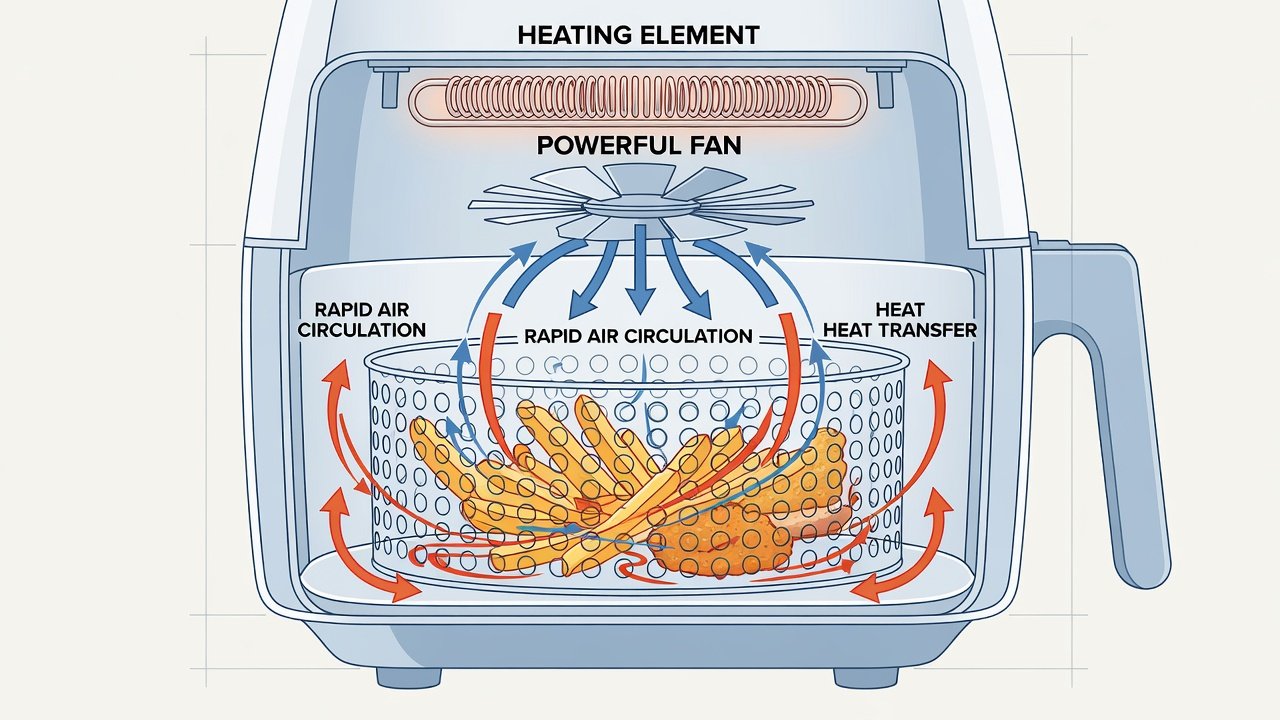
Step-by-Step Heat Transfer Process
- Preheat the air fryer to the target temperature, allowing the heating element to reach equilibrium and ensuring the chamber is uniformly hot before adding food.
- Place food in a single layer in the basket to maximize air contact and prevent steaming from trapped moisture.
- The fan activates, forcing heated air downward and around all surfaces at consistent velocity.
- Heat penetrates the outer layer, evaporating surface moisture and triggering browning reactions that create the desired crisp texture.
- Internal temperature rises steadily until the food reaches safe doneness without excess oil absorption or nutrient loss.
- Rest the food briefly after cooking to allow carryover heat to finish the process evenly.
Practical Tips for Optimizing Air Fryer Settings
- Shake the basket halfway through cooking to promote even circulation and prevent uneven browning on larger batches.
- Use parchment liners with holes for delicate vegetables to prevent sticking while allowing airflow to reach the food.
- Adjust temperature 15–25 degrees lower than oven recipes to account for intense convection and avoid overcooking the exterior.
- Pat proteins dry before seasoning to enhance crisp texture without added oil that could cause smoking.
- Monitor doneness with a meat thermometer for chicken (165°F internal) and vegetables (tender-crisp stage) to ensure safety and optimal nutrient retention.
- Experiment with 5-minute intervals for new recipes, as convection cooks faster than conventional methods.
- Lightly coat foods with oil using a spray bottle rather than pouring to control portions precisely.
Nutrient Retention Examples in Common Ingredients
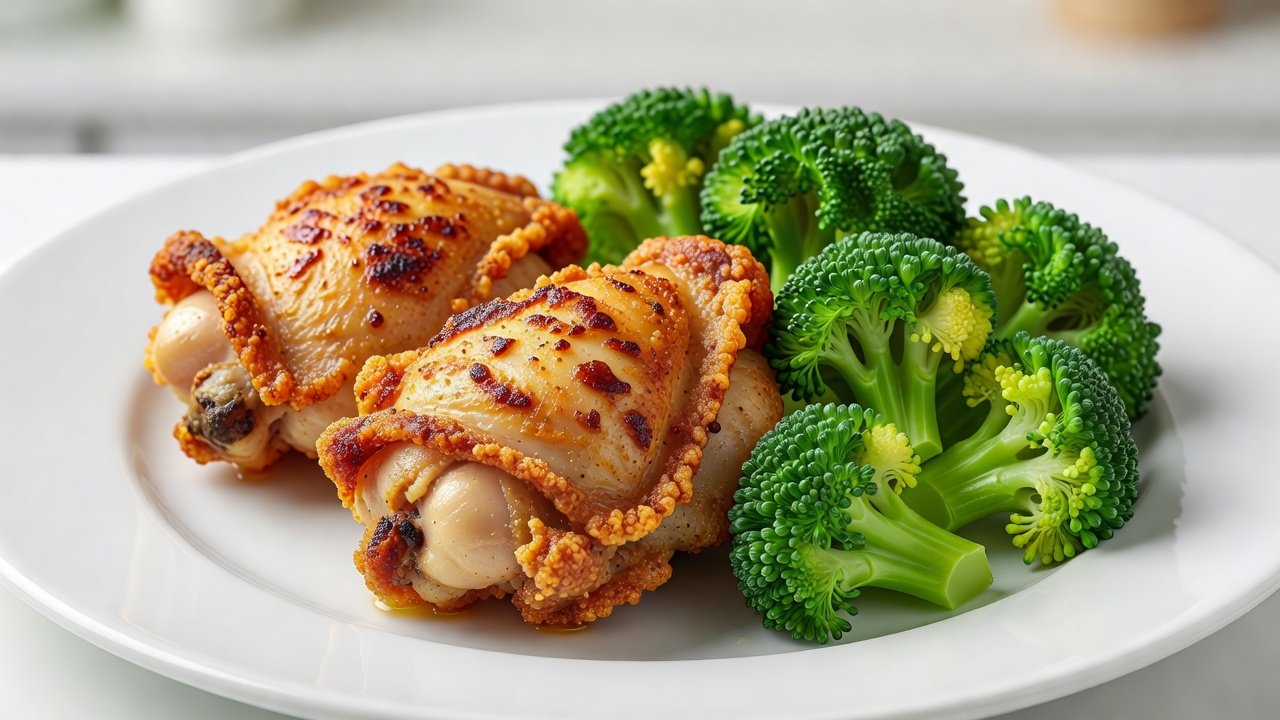
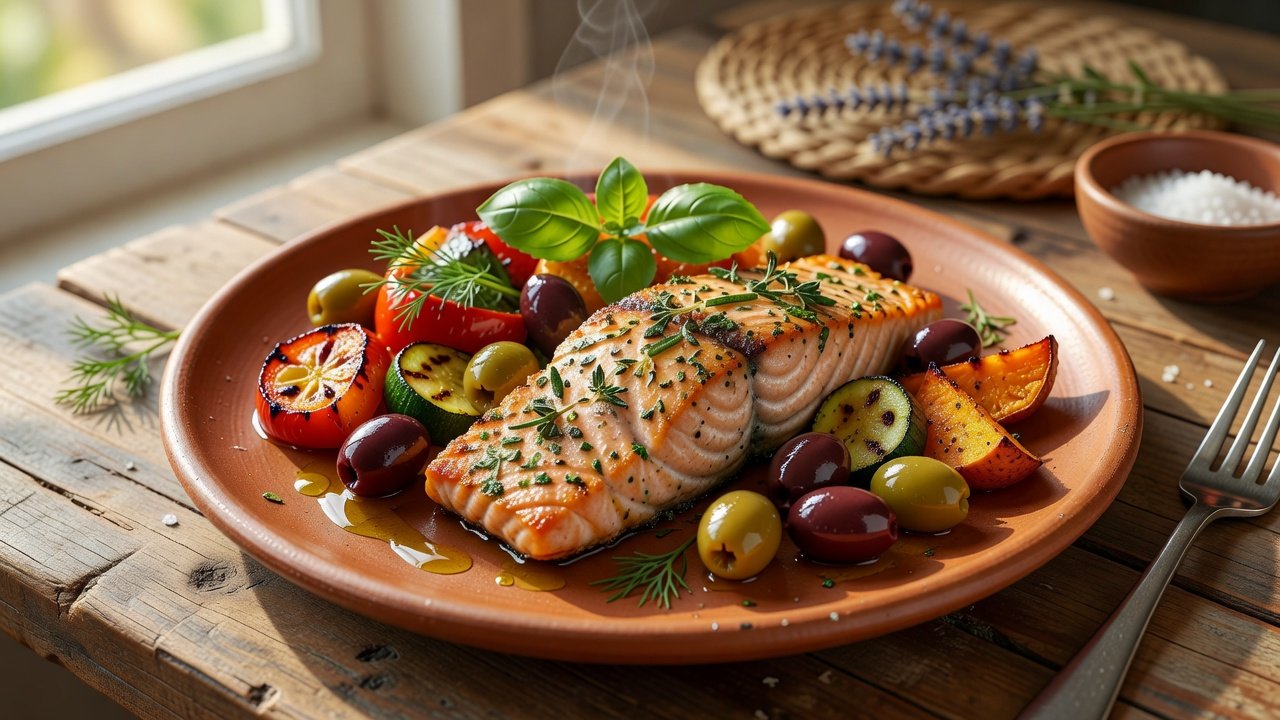
Chicken thighs air-fried at 380°F retain approximately 90 percent of their original B-vitamin content due to brief exposure. Bell peppers and asparagus show higher vitamin C levels than when boiled or deep-fried, as minimal water contact prevents leaching. Sweet potatoes develop caramelized edges while preserving beta-carotene better than pan-frying methods. Salmon fillets maintain omega-3 fatty acids effectively because the short cooking duration limits oxidation. Broccoli florets cooked in an air fryer at moderate temperatures keep more glucosinolates, compounds linked to health benefits, compared to longer boiling sessions. These examples demonstrate how convection cooking supports balanced dinners packed with vitamins and minerals.
Common Mistakes to Avoid for Best Results
Overcrowding the basket is a frequent error that blocks airflow and leads to soggy results instead of crisp textures. Skipping the preheat step can cause uneven cooking and longer overall times. Using too much oil creates excess smoke and defeats the calorie-saving purpose. Ignoring food size differences means smaller pieces may burn while larger ones remain undercooked. Always check manufacturer guidelines for your specific model to match temperature and time recommendations accurately.
FAQ
Can I use oil alternatives like avocado spray?
Yes, light sprays of high-smoke-point oils or even none at all work well for most vegetables and lean proteins, maintaining crisp results with fewer calories.
How does temperature affect nutrient retention?
Higher temperatures shorten cook time, which generally preserves more heat-sensitive vitamins, but avoid exceeding 400°F for extended periods to prevent formation of unwanted compounds.
Are air-fried dinners suitable for anti-inflammatory eating?
Air frying supports anti-inflammatory goals by limiting oxidized oils and excess fats while delivering satisfying textures that encourage vegetable consumption.
What are good oil-free options for breaded items?
Egg wash followed by a light coating of panko or almond flour creates crunch through convection alone, especially when the basket is lightly misted with water before cooking.
Does air frying change the glycemic impact of starchy sides?
The rapid cooking method can slightly lower the glycemic response of potatoes and similar vegetables by preserving more resistant starch compared to deep frying.
For deeper reading on healthy cooking techniques, visit the World Health Organization, the U.S. Food and Drug Administration, and the Centers for Disease Control and Prevention.
Conclusion
Mastering air fryer convection science empowers home cooks to create healthier crispy dinners that retain nutrients, reduce calories, and deliver satisfying textures. By applying the principles of rapid air circulation and strategic settings, anyone can enjoy weeknight meals that align with modern wellness priorities in 2026 and beyond.
No comments yet. Be the first!