 Func Eats
Understanding the Maillard Reaction in Air Fryers
The Maillard reaction is a complex series of chemical interactions between amino acids and reducing sugars that occurs when food is heated above approximately 280°F. This process generates hundreds of flavor compounds responsible for the savory, roasted, and caramelized notes in cooked foods. In air fryer technology, the Maillard reaction is accelerated by the appliance’s design, allowing home cooks to achieve restaurant-quality crispiness with dramatically reduced oil. Unlike deep frying, which relies on submersion in hot fat to transfer heat, air fryers use rapid convection to promote surface dehydration and browning, making meals healthier without sacrificing taste or texture.
Many people searching for why air fryer meals taste fried yet remain healthy are actually looking for explanations of this exact science. The reaction not only creates appealing color and aroma but also contributes to the satisfying crunch that signals doneness. In 2026, with growing interest in nutrient-dense eating, understanding how to harness the Maillard reaction safely and efficiently has become central to modern home cooking.
The Physics of Rapid Air Circulation
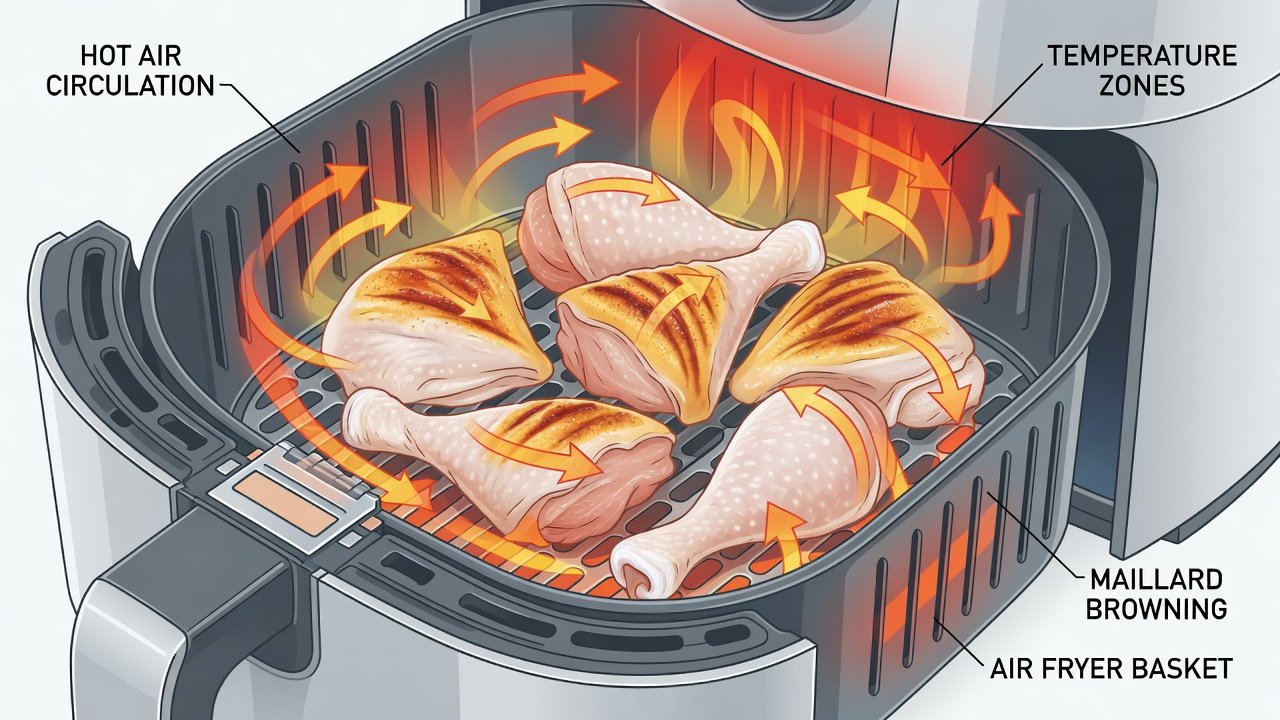
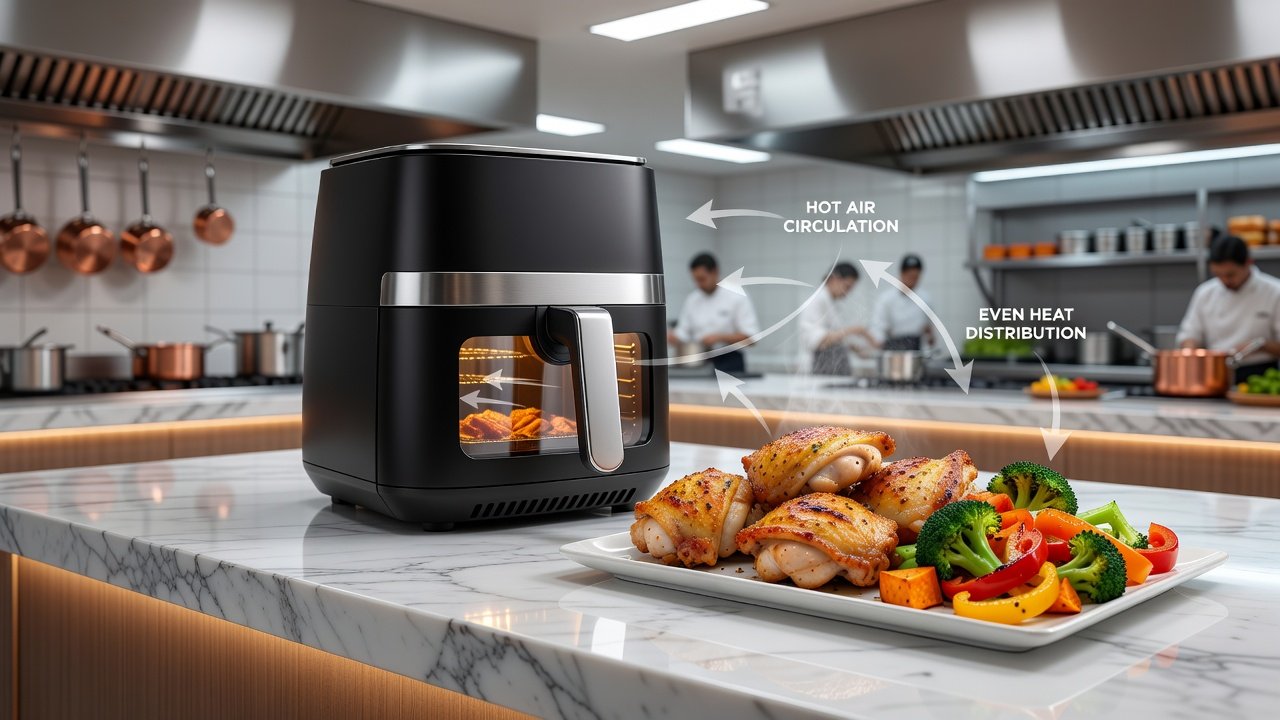
Air fryers operate on the principle of forced convection. A powerful fan draws air through a heating element and forces it at high velocity across all surfaces of the food. This turbulent airflow strips away the boundary layer of cooler air that normally insulates food, allowing heat to reach the surface much faster than in a conventional oven. The result is quicker moisture evaporation from the exterior, which is essential for triggering the Maillard reaction. Because less moisture remains on the surface, proteins and sugars interact more readily, producing the desired browning and flavor development at lower overall fat levels.
Engineers design air fryer baskets with perforations and elevated racks to maximize this airflow. When food is overcrowded, the air cannot circulate freely, leading to uneven cooking and reduced Maillard activity. Proper spacing ensures every piece receives consistent heat exposure, which is why recipes often recommend cooking in batches for optimal results.
Temperature Ranges for Optimal Browning
The Maillard reaction begins in earnest around 320°F and peaks in efficiency between 340°F and 375°F. Below 300°F, browning is minimal and food tends to steam rather than crisp. Above 400°F, the reaction can accelerate into burning, producing bitter compounds and potentially harmful byproducts. Most air fryer recipes therefore target the 340–375°F window for proteins and vegetables. For delicate items like fish, slightly lower temperatures around 330°F allow gradual browning without drying out the interior.
Users should preheat the air fryer for 3–5 minutes to stabilize the chamber temperature before adding food. This step ensures the Maillard reaction starts immediately upon contact rather than during a slow warm-up phase.
Nutrient Preservation Compared to Traditional Frying
Deep frying at 350–375°F for extended periods can destroy up to 50% of heat-labile vitamins such as vitamin C and certain B vitamins while also promoting oil absorption that adds hundreds of empty calories. Air frying shortens exposure time and limits oil to a thin surface layer, preserving more micronutrients. The reduced fat content also lowers the formation of oxidized lipids that may contribute to inflammation. Authoritative health organizations emphasize choosing cooking methods that minimize added fats while maintaining food safety.
Learn more about food safety and cooking methods from the FDA. The World Health Organization provides guidelines on healthy eating and fat intake. Additional resources from the USDA highlight nutrient retention across cooking techniques and Mayo Clinic offers evidence-based advice on balanced meal preparation.
Air Fryer Dinner Ideas: Chicken and Vegetables
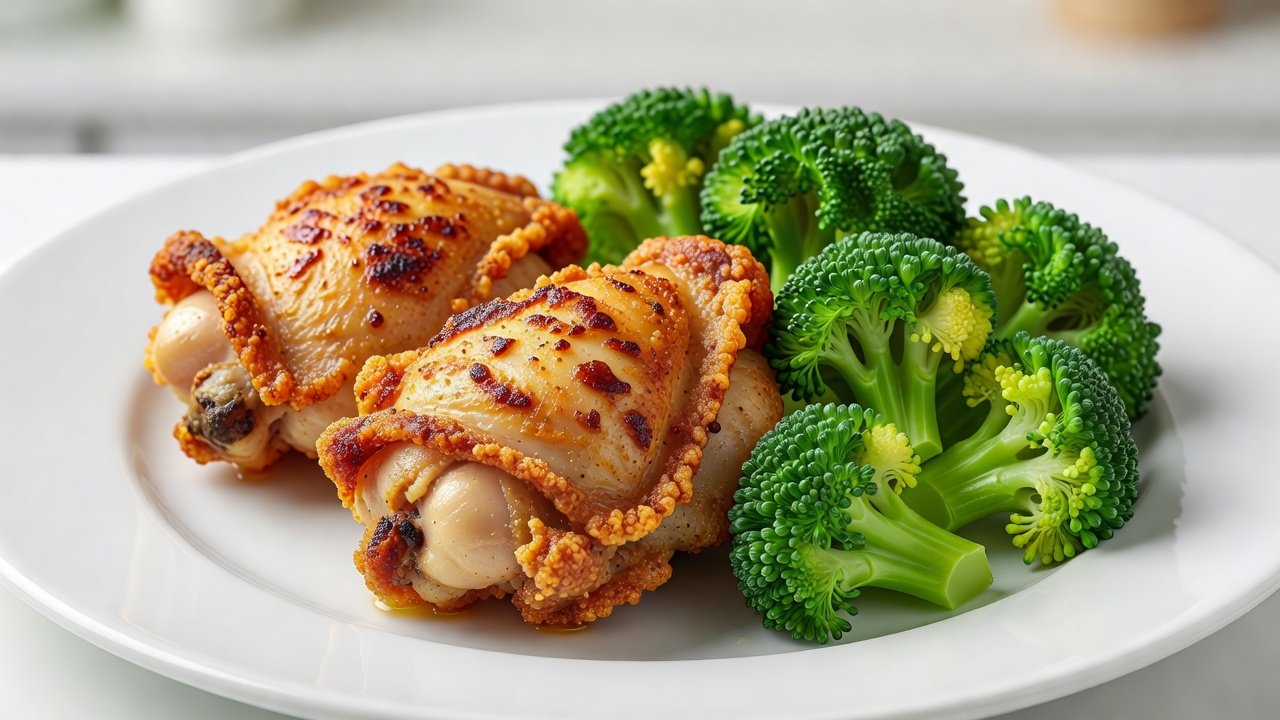
Practical application of Maillard science shines in everyday meals. Crispy air-fried chicken thighs begin with patting the skin dry, applying a light seasoning of salt, garlic powder, and smoked paprika, then brushing with one teaspoon of oil. Cook at 375°F for 18–22 minutes, flipping once. The high airflow creates deep browning while the short cook time keeps the meat juicy.
Vegetable sides such as broccoli, Brussels sprouts, or bell peppers benefit from the same principle. Toss florets with minimal oil and a pinch of salt, then air fry at 360°F for 10–12 minutes. The edges caramelize beautifully, delivering sweet, nutty flavors from the Maillard reaction. For variety, try turkey meatballs seasoned with herbs at 370°F for 12–15 minutes or salmon fillets at 380°F for 10–14 minutes. These combinations provide complete dinners high in protein and fiber while keeping total calories significantly lower than pan-fried or deep-fried alternatives.
Step-by-Step Tips for Even Crisping
- Pat all surfaces completely dry with paper towels to remove excess moisture that would otherwise steam the food.
- Arrange pieces in a single layer with at least half an inch of space between items for unobstructed airflow.
- Use only ½ to 1 teaspoon of oil per serving, applied evenly with a brush or spray bottle to encourage surface browning.
- Flip or shake the basket halfway through the cook time to expose all sides equally to hot air.
- Avoid parchment paper for the first five minutes so the Maillard reaction can begin unimpeded.
- Monitor doneness visually rather than relying solely on timers, as air fryer models vary in power.
Calorie Savings and Health Comparisons
A standard deep-fried chicken breast can absorb enough oil to reach 400–450 calories per serving. The equivalent air-fried portion, prepared with minimal oil, typically contains 200–240 calories. Similar savings appear with vegetables and other proteins. Over a week of meals, these reductions support weight management and heart-healthy eating patterns without requiring drastic changes in portion size or flavor preferences.
Cooking Times Chart
| Food | Temperature | Time | Oil Amount |
|---|---|---|---|
| Chicken Thighs (bone-in) | 375°F | 18–22 min | 1 tsp |
| Broccoli Florets | 360°F | 10–12 min | 1 tsp |
| Salmon Fillet | 380°F | 10–14 min | ½ tsp |
| Turkey Meatballs | 370°F | 12–15 min | 1 tsp |
| Brussels Sprouts | 365°F | 12–15 min | 1 tsp |
| Pork Tenderloin Medallions | 380°F | 10–13 min | ½ tsp |
Common Mistakes to Avoid
Overcrowding the basket is the most frequent error, preventing proper airflow and resulting in soggy rather than crispy food. Another mistake is skipping the preheat step, which delays the onset of the Maillard reaction. Using too much oil can also lead to smoking and uneven browning. Finally, opening the basket repeatedly releases hot air and extends cook time, reducing efficiency.
FAQ on Air Fryer Science
Why do air fryer meals taste fried but stay healthy?
The Maillard reaction creates identical browned flavors and crisp texture through rapid surface dehydration and chemical browning, yet requires far less oil because hot air circulation replaces oil submersion.
What temperature range optimizes the Maillard reaction?
Between 320°F and 375°F for most proteins and vegetables, allowing full flavor development without excessive charring or nutrient degradation.
Does air frying preserve more nutrients than deep frying?
Yes. Shorter heat exposure and minimal oil absorption help retain water-soluble vitamins while limiting formation of oxidized fats.
Can the Maillard reaction occur without any oil?
Minimal oil is still recommended to conduct heat evenly and prevent sticking, but the amount is a fraction of what deep frying requires.
How does air fryer cooking compare to oven baking for crispiness?
Air fryers achieve superior crispiness in less time due to higher-velocity airflow, making the Maillard reaction more efficient than standard convection ovens.
Conclusion
Mastering the science behind the Maillard reaction empowers home cooks to create flavorful, crispy meals that support health goals. By controlling temperature, airflow, and preparation techniques, anyone can enjoy the sensory experience of fried food with substantially lower calories and better nutrient retention. Consistent application of these principles transforms the air fryer from a novelty appliance into a reliable tool for everyday healthy cooking.

No comments yet. Be the first!