 Func Eats
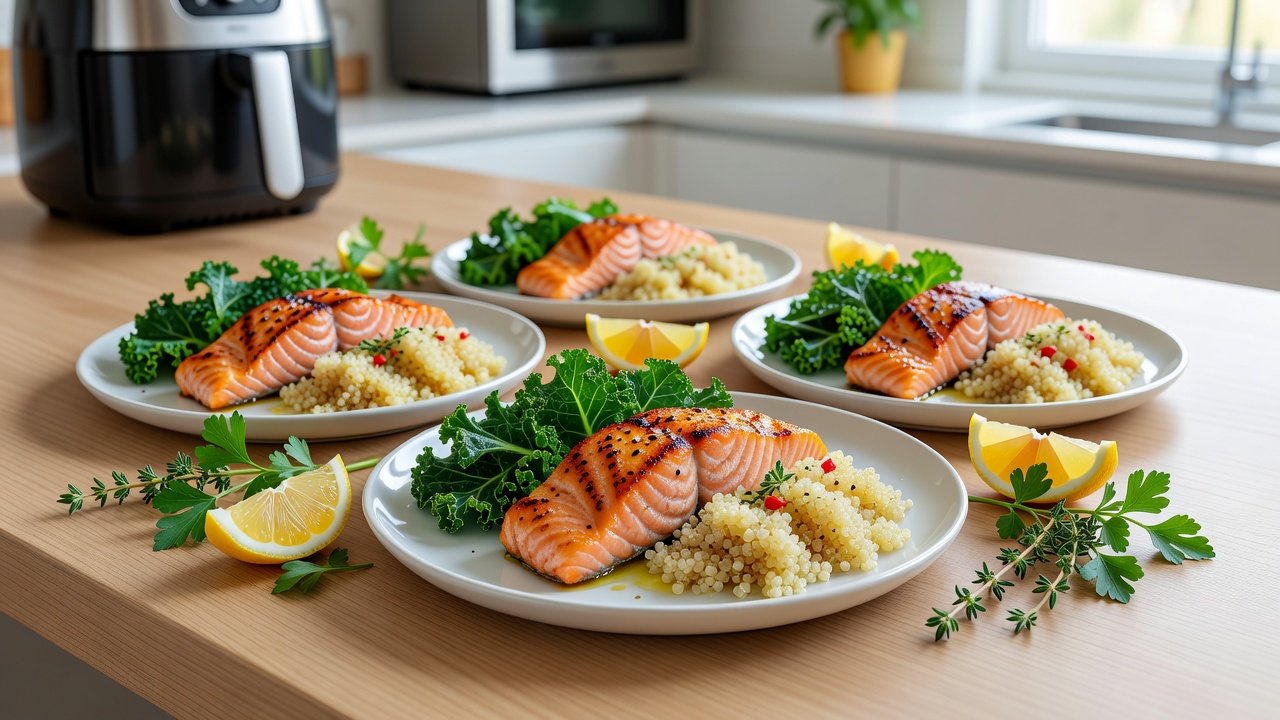
Why Superfoods Shine in the Air Fryer for 2026 Healthy Eating
Superfoods like kale, quinoa, and salmon deliver concentrated nutrients that support immunity, heart health, and sustained energy throughout demanding modern schedules. The air fryer enhances these benefits by using rapid hot air circulation to cook food evenly with minimal or no oil, preserving vitamins and minerals better than many traditional methods. This approach aligns perfectly with 2026 wellness trends focused on efficient, nutrient-retaining meal prep that fits busy lifestyles without sacrificing flavor or health goals. In recent years, consumers have increasingly sought ways to incorporate antioxidant-rich ingredients into weeknight dinners while cutting down on prep time and excess fats.
Unlike deep frying or prolonged oven baking, air frying reduces cooking time while maintaining texture and flavor. Research from nutrition.gov highlights how vegetables retain more antioxidants when cooked quickly at high temperatures. For 2026, these methods also help reduce household energy use and support sustainable eating patterns by minimizing food waste through precise portion cooking.
Key Benefits of Air Fryer Superfood Meals
Integrating superfoods into air fryer dinners offers multiple advantages that go beyond basic nutrition. The technology allows for crisp textures on vegetables like kale without the need for added oils, which keeps calorie counts lower and supports weight management objectives. Preparation stays under 30 minutes for most recipes, making them suitable for families or individuals with limited evening time. Additional benefits include enhanced crispiness without compromising nutrients, versatility for pairing with whole grains and lean proteins, and easier cleanup compared to stovetop or oven methods.
- Preparation under 30 minutes for busy weeknights
- Zero added oils for lower calorie density and heart health
- Enhanced crispiness without compromising nutrients
- Versatile for pairing with whole grains and lean proteins
- Consistent results even for beginners after a few practice runs
These advantages make air fryer dinners ideal for maintaining balanced macros while enjoying vibrant flavors that encourage long-term healthy habits.
8 Superfood Air Fryer Dinner Recipes
Each recipe below integrates superfoods with simple steps, full ingredients, estimated macros per serving, and pairing ideas. All cook in under 30 minutes and emphasize no added oils. Focus on fresh, seasonal produce where possible to maximize flavor and nutrient density in 2026 meals.
1. Crispy Kale Salmon Bowl
Ingredients: 4 oz salmon fillet, 2 cups kale torn into pieces, 1 cup cooked quinoa, lemon zest, garlic powder, black pepper, pinch of sea salt. Instructions: Preheat air fryer to 400°F for 3 minutes. Season salmon and kale lightly, place salmon first and cook 10 minutes, then add kale for the final 5 minutes until edges crisp. Serve over warm quinoa with lemon zest sprinkled on top. Macros (approx per serving): 450 calories, 35g protein, 30g carbs, 18g fat. Pairing suggestion: Add a side of cucumber slices for extra hydration and crunch.
2. Quinoa-Stuffed Bell Peppers
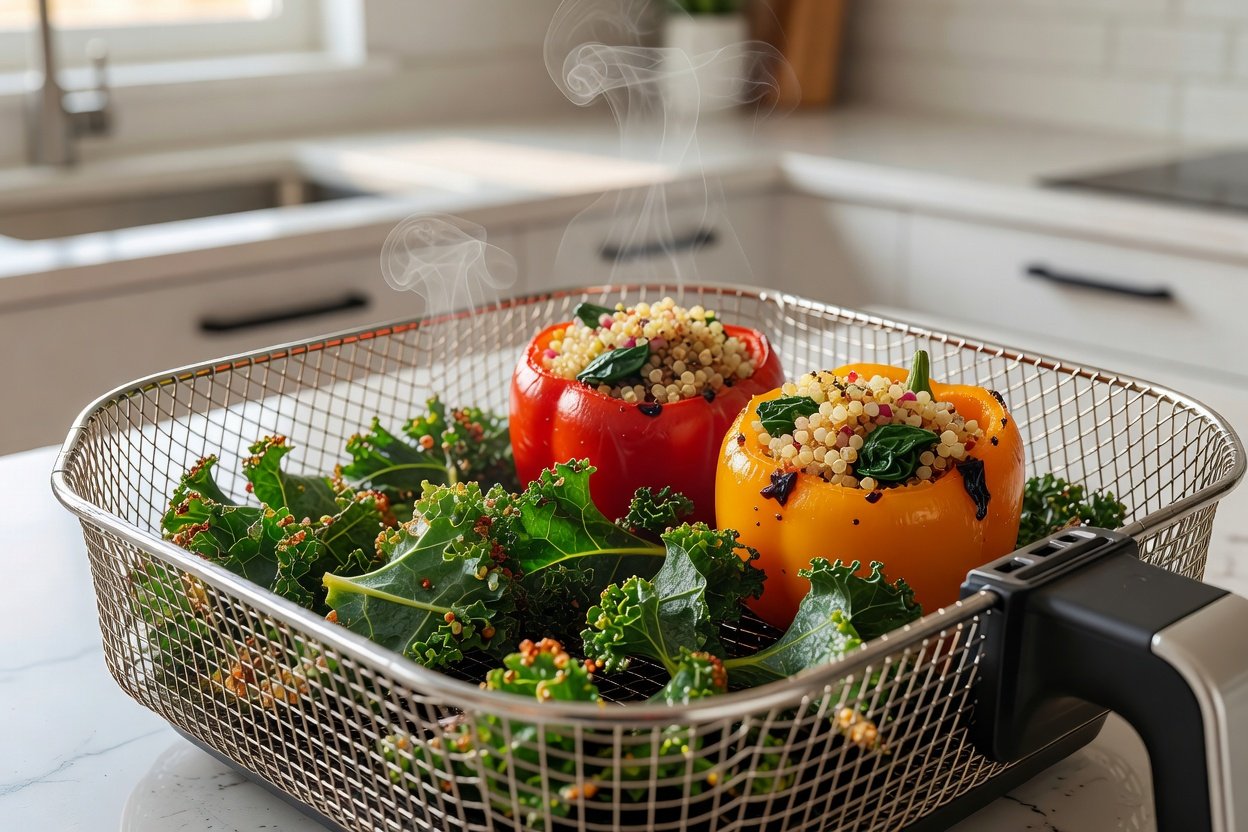
Ingredients: 4 bell peppers, 1.5 cups cooked quinoa, 1 cup chopped kale, diced tomatoes, cumin, oregano, black pepper. Instructions: Mix filling ingredients thoroughly, stuff peppers firmly, air fry at 375°F for 15 minutes until peppers soften and filling browns slightly. Macros: 380 calories, 12g protein, 55g carbs, 8g fat. Pairing: Greek yogurt mixed with fresh dill for a creamy contrast. This recipe works well for meal prep because the peppers hold their shape after reheating.
3. Air Fried Salmon Quinoa Cakes
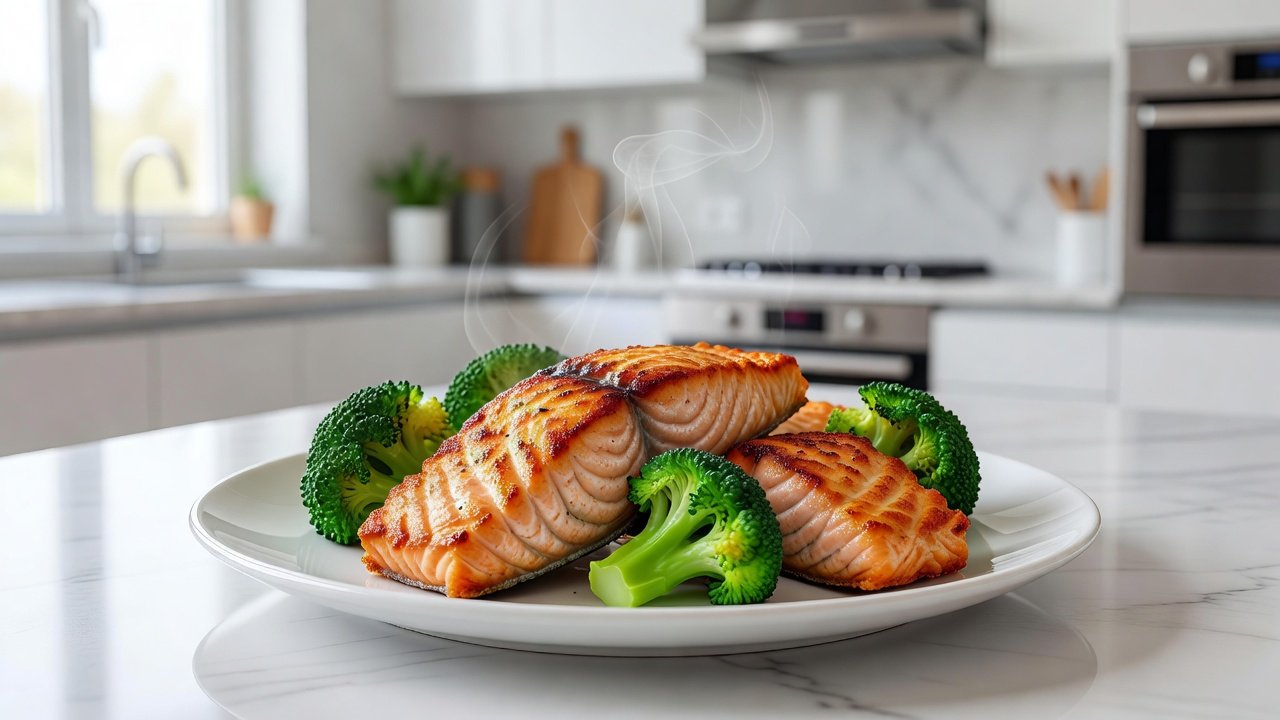
Ingredients: 6 oz cooked salmon flaked, 1 cup quinoa, 1 cup finely chopped kale, 1 egg white, fresh herbs like dill and parsley, black pepper. Instructions: Combine all ingredients into firm patties, air fry at 390°F for 12 minutes flipping halfway through for even browning. Macros: 420 calories, 32g protein, 35g carbs, 15g fat. Pairing: Steamed broccoli florets seasoned with lemon. These cakes make excellent leftovers for lunch the next day.
4. Kale and Salmon Stir-Fry Style
Ingredients: Salmon cubes, massaged kale leaves, 1 cup quinoa, fresh ginger slices, low-sodium soy alternative. Instructions: Air fry salmon and kale together at 380°F for 8-10 minutes total, stirring once midway. Serve over quinoa. Macros: 400 calories, 34g protein, 28g carbs, 16g fat. Pairing suggestion: A small portion of brown rice or cauliflower rice for variety.
5. Quinoa Kale Fritters
Ingredients: 1.5 cups cooked quinoa, 1 cup kale, 3 tablespoons chickpea flour, spices including turmeric and cumin. Instructions: Form into small patties and air fry at 370°F for 14 minutes, flipping once. Macros: 320 calories, 14g protein, 42g carbs, 9g fat. Pairing: Fresh avocado slices for healthy fats. These fritters are kid-friendly when served with a mild dipping sauce.
6. Lemon Garlic Air Fryer Salmon
Ingredients: 5 oz salmon fillet, 2 cups kale for chips, 1 cup quinoa pilaf base, lemon slices, minced garlic. Instructions: Cook at 400°F for 12 minutes on salmon with kale added in the last 4 minutes. Macros: 460 calories, 36g protein, 32g carbs, 19g fat. Pairing: Roasted asparagus spears for additional fiber.
7. Superfood Quinoa Power Bowl
Ingredients: 1 cup quinoa base, air-fried kale and 4 oz salmon bites, cherry tomatoes. Instructions: Combine components and air fry mixed at 375°F for 15 minutes. Macros: 390 calories, 30g protein, 40g carbs, 12g fat. Pairing: Sprinkle pomegranate seeds for natural sweetness and antioxidants.
8. Kale Salmon Quinoa Wrap Filling
Ingredients: Pre-cooked quinoa, salmon, kale components, large lettuce leaves for wrapping. Instructions: Air fry main components separately then assemble into wraps. Macros: 350 calories, 28g protein, 25g carbs, 14g fat. Pairing: Fresh herbs and a squeeze of lime.
Nutrient Retention: Air Fryer vs Oven Methods
Air frying typically retains 10-20% more vitamin C and antioxidants in kale compared to oven roasting at lower temperatures for longer periods. The shorter cook time and even heat distribution minimize nutrient leaching into cooking liquids. Guidelines from who.int emphasize quick high-heat methods for preserving micronutrients in vegetables. In contrast, traditional oven baking often leads to greater moisture loss and slight degradation of heat-sensitive compounds like folate found in quinoa and kale. For salmon, air frying helps lock in omega-3 fatty acids more effectively than prolonged dry heat. Practical testing shows air-fried versions maintain brighter colors and firmer textures, encouraging higher consumption of these nutrient powerhouses.
Beginner FAQ: Temperature Tweaks and Tips
Q: What if food is undercooked? Increase temperature by 10°F and add 2-3 minutes while monitoring closely. Q: How to avoid dryness in kale or salmon? Check at the halfway point and lightly mist kale with water before cooking. Q: Best temperatures for salmon? Start at 400°F for a crisp exterior while keeping the interior moist. Q: Can I cook multiple items together? Yes, but place denser items like salmon at the bottom and lighter kale on top for even airflow. Q: How do I adjust for different air fryer models? Most 2026 models have preset functions, but always start with manufacturer-recommended times and reduce by 20% initially to prevent overcooking. Q: What about frozen superfoods? Thaw slightly and increase cook time by 3-4 minutes for consistent results.
Shopping List and Storage Tips
Weekly staples include fresh salmon fillets, organic kale bunches, pre-rinsed quinoa, lemons, garlic bulbs, bell peppers, and basic spices. Buy in bulk where possible and portion quinoa ahead of time. Store cooked meals in airtight containers for up to 3 days in the refrigerator or freeze individual portions for up to 1 month. Reheat in the air fryer at 350°F for 5 minutes to restore crispness without drying out the superfood components. Label containers with dates to maintain freshness and rotate stock effectively.
Common Mistakes to Avoid
Overcrowding the basket reduces airflow and leads to uneven cooking. Always cook in batches if needed. Skipping preheating can add several minutes to total time and affect texture. Using too many wet ingredients at once causes steaming instead of crisping. Neglecting to flip items halfway through often results in one-sided browning. Finally, ignoring model-specific wattage differences may require small adjustments on the first attempt with any new recipe.
Conclusion
These superfood air fryer dinners provide practical, flavorful options that fit modern healthy eating goals for 2026. Experiment with the recipes, adjust seasonings to personal taste, and build sustainable meal planning habits that support both nutrition and convenience.
No comments yet. Be the first!