 Func Eats

Introduction to Nutrition for Shift Workers
Shift work disrupts natural circadian rhythms, making it challenging to maintain consistent energy levels and mental clarity. Custom nutrition plans address these issues by focusing on timed macronutrient intake, blood sugar stability, and nutrient-dense foods that support alertness during odd hours. This guide provides actionable frameworks tailored to night, rotating, and early morning shifts. Shift workers often experience fatigue crashes, poor sleep quality, and reduced cognitive performance due to misaligned eating patterns with their work schedules. By adopting personalized approaches, individuals can optimize their diets to counteract these effects and improve overall well-being. Research highlights that irregular schedules increase risks for metabolic issues, underscoring the need for targeted nutrition beyond generic advice.
Goal-Based Eating Frameworks
Effective plans prioritize three goals: sustained energy through complex carbohydrates and proteins, blood sugar stabilization via fiber and healthy fats, and cognitive enhancement from omega-3s and antioxidants. Align meals with your shift rather than traditional daytime eating patterns. For sustained energy, focus on pairing slow-digesting carbs like sweet potatoes with lean proteins such as chicken or lentils. Blood sugar stability comes from incorporating soluble fiber from oats and vegetables while limiting refined sugars. Mental sharpness benefits from foods rich in B vitamins, magnesium, and healthy fats like avocados and fatty fish. These frameworks help prevent the common mid-shift slump by providing steady fuel release throughout irregular hours. Implementing these goals requires understanding personal responses, as individual metabolism varies based on age, activity, and shift duration.
Macro Timing Examples
For a night shift starting at 10 PM, consume a balanced meal with 40% complex carbs, 30% protein, and 30% fats around 8 PM. Follow with a light snack at 2 AM featuring protein and fiber. For early morning shifts beginning at 5 AM, eat a moderate breakfast at 4 AM with emphasis on protein to maintain focus. Rotating shift workers should adjust windows dynamically, starting with a protein-heavy meal two hours before each new shift begins. Examples include pre-shift smoothies with spinach, banana, and whey protein or post-shift recovery meals with eggs and whole-grain toast. Additional timing might involve a small protein shake during long shifts to bridge gaps without overloading digestion.
Sample 7-Day Custom Nutrition Plan
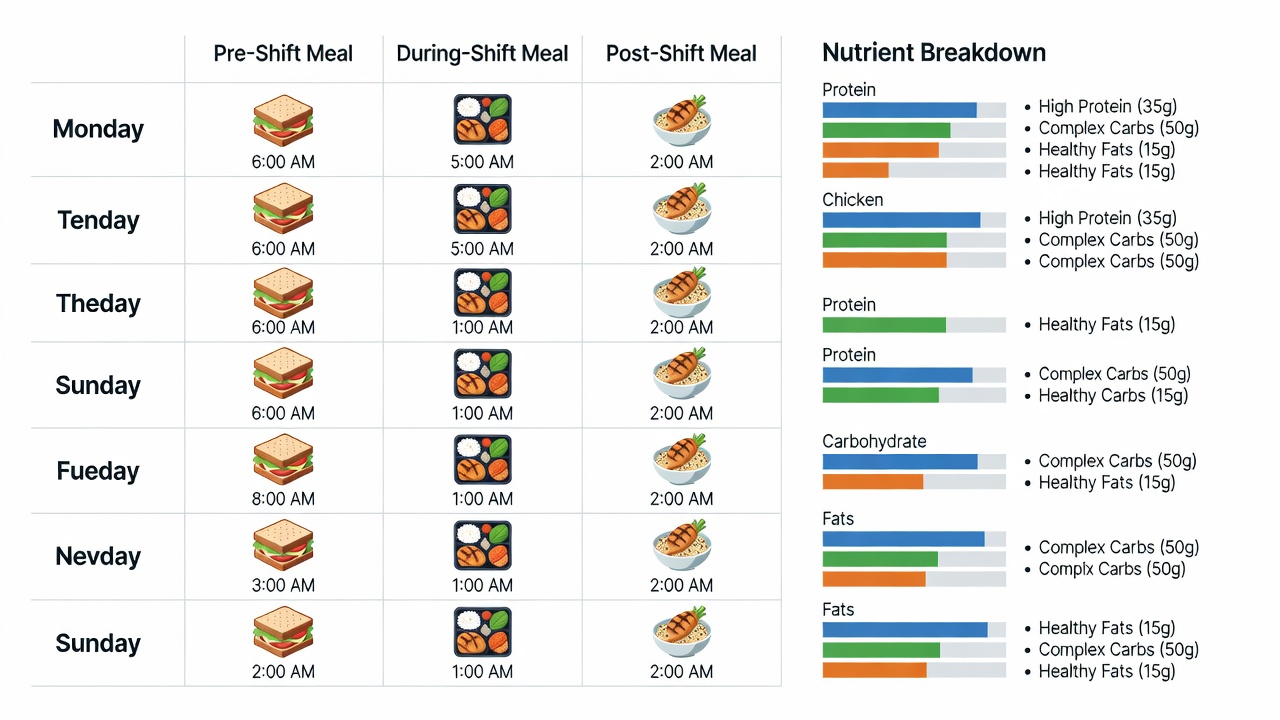
Below is a flexible template adaptable to individual calorie needs. It emphasizes whole foods and simple prep. Day 1 for night shift includes pre-shift grilled chicken quinoa bowl with broccoli, mid-shift Greek yogurt with berries and almonds, and post-shift salmon with sweet potatoes and greens. Day 2 rotates to tofu stir-fry with brown rice before shift, cottage cheese with apple slices mid-shift, and lean beef with mixed vegetables after. Days 3 through 7 continue this pattern by varying proteins like turkey, eggs, and beans while including consistent fiber sources such as lentils and leafy greens. Each day incorporates hydration reminders and optional snacks like carrot sticks with hummus to maintain steady energy. This plan supports 7-day cycles by allowing swaps based on preferences while keeping macro ratios consistent. Users can scale portions up or down depending on energy expenditure during shifts.
Comparisons of Common Shift-Friendly Foods
Compare options like oats versus white rice for sustained energy, where oats provide longer-lasting glucose due to higher fiber content. Almonds outperform chips as snacks because they deliver healthy fats and protein without blood sugar spikes. Other comparisons include salmon versus chicken for omega-3 benefits, and berries versus bananas for antioxidant density. Whole foods consistently outperform processed alternatives by providing steady glucose release and essential micronutrients that support both physical stamina and mental acuity during demanding shifts. For instance, choosing quinoa over pasta adds complete protein and better mineral profiles suited to irregular eating windows.
Adjustments for Different Shift Types
Night shift workers benefit from higher protein intake before shifts to promote satiety and focus. Rotating shifts require flexible fasting windows of 12-14 hours between major meals to help reset circadian cues. Early morning shifts focus on lighter evening meals with more emphasis on magnesium-rich foods to improve sleep quality after the shift ends. Permanent day shifts within shift work rotations still need adjustments for occasional overtime by prioritizing anti-inflammatory ingredients like turmeric and berries. Tailoring further involves monitoring how each shift type affects hunger cues and adjusting fiber intake accordingly to prevent digestive discomfort during work.
Practical Meal Prepping Steps
Batch cook proteins and grains on off days using these steps: 1. Plan menus for the upcoming week based on shift schedule. 2. Shop for versatile ingredients like quinoa, eggs, and frozen vegetables. 3. Cook large portions of proteins and divide into containers. 4. Use portion containers and label by shift timing. 5. Store in airtight containers for grab-and-go convenience. This approach reduces decision fatigue and ensures nutrient-dense options are always available during irregular schedules. Additional tips include pre-chopping vegetables, preparing overnight oats for quick access, and freezing individual meal portions to extend freshness over multiple days.
Supplement Considerations
Consider vitamin D for limited sunlight exposure and magnesium for sleep regulation. Omega-3 supplements may further support brain function when dietary intake is inconsistent. Always consult a healthcare provider before starting any regimen to avoid interactions. Authoritative guidance is available from World Health Organization and Centers for Disease Control and Prevention. Additional insights on micronutrient needs for shift populations appear in resources from National Institutes of Health.
Common Mistakes to Avoid
Many shift workers fall into pitfalls such as skipping meals entirely, relying on caffeine and sugar for quick boosts, or eating heavy meals right before sleep. Instead, prioritize consistent timing and balanced plates. Another error is neglecting hydration, which can worsen fatigue. Track intake initially to identify patterns and adjust proactively.
FAQs on Avoiding Common Pitfalls
How do I avoid fatigue crashes? Space meals evenly every 3-4 hours and avoid sugary snacks that cause rapid spikes and drops in blood sugar. What if my schedule changes weekly? Build modular meal templates that can be rearranged quickly. Is caffeine helpful? Use it strategically in the first half of shifts but taper off to protect sleep. Should I eat immediately after waking? Wait 1-2 hours for better digestion alignment with your body clock. How important is hydration? Aim for consistent water intake as dehydration amplifies fatigue. More resources on circadian health can be found via National Institutes of Health.
Conclusion
Implementing these custom nutrition strategies empowers shift workers to optimize energy and focus. Track progress over several weeks and refine based on personal responses for long-term success and sustained performance. Consistency in applying these principles leads to noticeable improvements in daily functioning and overall health outcomes.


No comments yet. Be the first!