 Func Eats
Budget-Friendly Air Fryer Dinner Ideas for Healthy 2026 Meals
Home cooks watching their wallets in 2026 can still enjoy nutritious, flavorful dinners thanks to the air fryer. This versatile appliance delivers crispy results with minimal oil, making it ideal for stretching affordable ingredients into satisfying meals. Whether sourcing seasonal vegetables or using pantry staples, air frying cuts cooking time and energy costs while preserving nutrients. Families on tight budgets appreciate how the device turns basic proteins and produce into restaurant-style dishes without extra equipment or expensive oils. The following guide dives deep into sourcing strategies, five complete low-cost recipes with detailed macros and shopping lists, cost comparisons, batch cooking methods, temperature references, and answers to common questions about reducing waste.
By focusing on simple adaptations and seasonal items, readers can plan dinners that support both health goals and financial limits throughout the year.
Why the Air Fryer Excels for Budget Meals
Air fryers cook food faster than conventional ovens and use up to 80 percent less oil than traditional deep frying methods. This efficiency directly lowers grocery expenses and reduces the time spent on cleanup. For cost-conscious households, the appliance performs especially well with bulk purchases of chicken thighs, root vegetables, and legumes that cook evenly without constant monitoring. Shorter cooking cycles also mean lower electricity usage compared to running a full oven, which adds up over repeated weeknight meals. Nutrition stays high because the rapid hot air circulation locks in moisture while creating appealing textures that encourage everyone at the table to eat more vegetables.
Affordable Ingredient Sourcing and Bulk Prep Strategies
Successful budget cooking begins at the store. Shop weekly sales for root vegetables like carrots and potatoes, frozen fish fillets, and dried or canned legumes. Build a reliable pantry of oats, chickpeas, brown rice, and basic spices that stretch across multiple recipes. When possible, purchase family packs of chicken or turkey and divide them into meal-sized portions before freezing. Weekend prep sessions can include washing, peeling, and chopping several pounds of vegetables at once so they are ready for quick assembly on busy evenings. This system prevents last-minute expensive takeout decisions and keeps nutrition consistent. Pairing these habits with the air fryer allows cooks to transform simple staples into varied dinners without repeating the same flavors every night.
Five Original Low-Cost Air Fryer Dinner Recipes
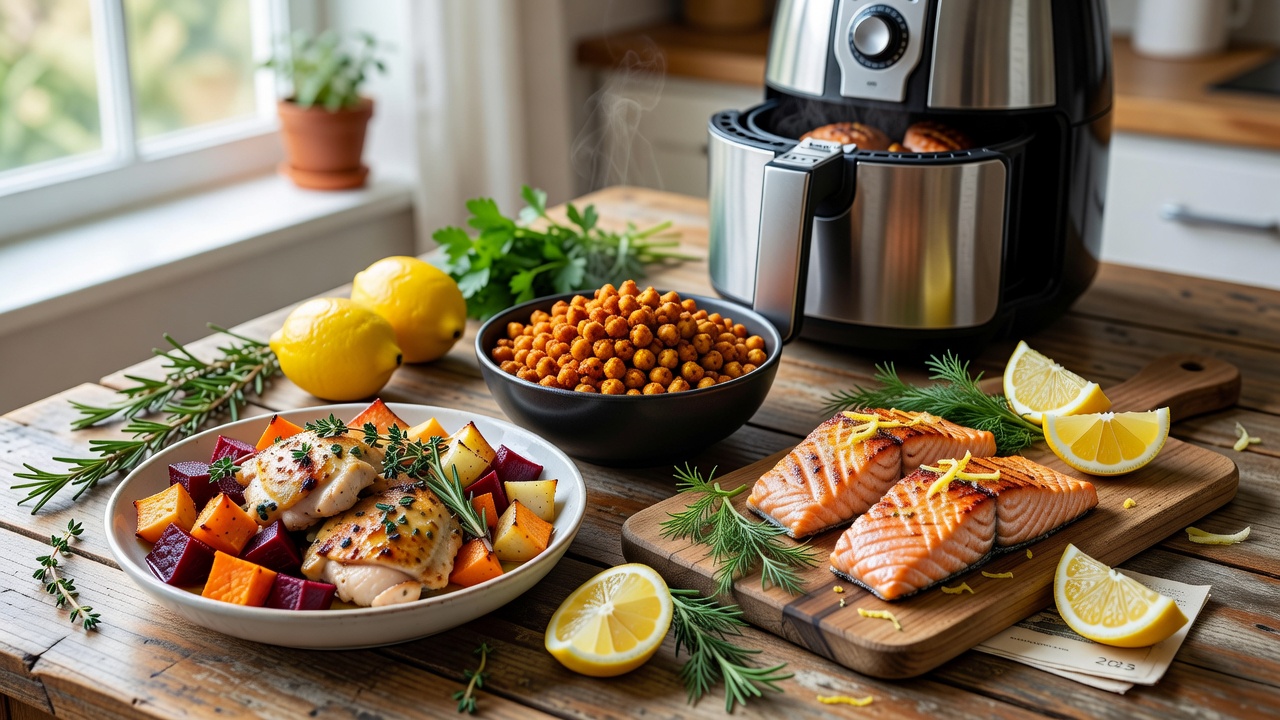
1. Lemon Herb Chicken Thighs with Root Vegetables
Shopping list for four servings: one pound bone-in chicken thighs, two large carrots, two medium potatoes, one lemon, three garlic cloves, dried thyme, rosemary, salt, pepper, and olive oil spray. Macros per serving: 320 calories, 28 grams protein, 22 grams carbohydrates, 14 grams fat. Step-by-step instructions: Pat the chicken dry and rub with minced garlic, lemon zest, and herbs. Cut vegetables into even one-inch pieces and toss lightly with spray. Arrange everything in a single layer in the air fryer basket. Cook at 380 degrees Fahrenheit for 18 minutes, shaking the basket once halfway through. Check that chicken reaches 165 degrees internally before serving. Serve with a squeeze of fresh lemon for brightness.
2. Crispy Chickpea and Veggie Bowls
Shopping list: two cans chickpeas, one head broccoli, two bell peppers, cumin, smoked paprika, garlic powder, salt, and olive oil spray. Macros per serving: 280 calories, 12 grams protein, 38 grams carbohydrates, 9 grams fat. Instructions: Drain and rinse chickpeas thoroughly, then pat dry for maximum crispiness. Chop broccoli into florets and slice peppers into strips. Toss all ingredients with spices and a light spray of oil. Spread in the basket and cook at 400 degrees Fahrenheit for 15 minutes, stirring once. The result is a satisfying plant-based bowl that pairs well with leftover rice or quinoa.
3. Baked Salmon Fillets with Asparagus
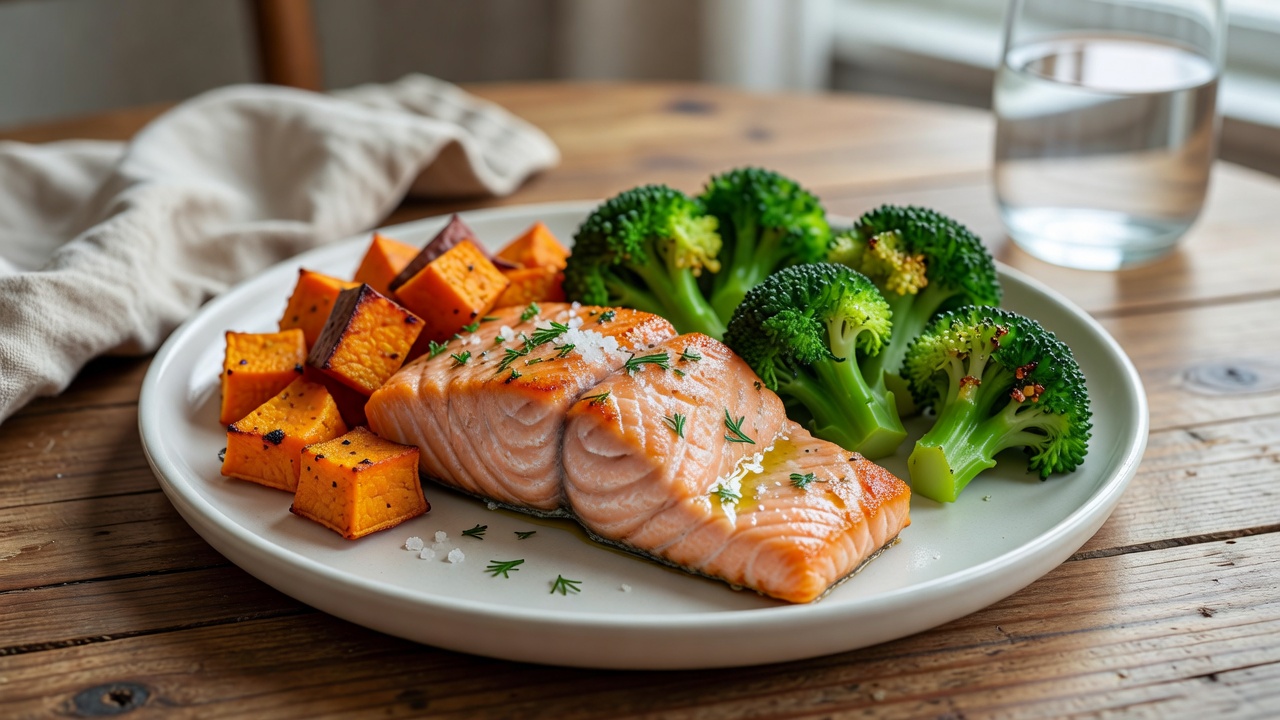
Shopping list: one pound salmon fillets, one bunch asparagus, lemon zest, fresh or dried dill, salt, and pepper. Macros per serving: 290 calories, 32 grams protein, 8 grams carbohydrates, 15 grams fat. Instructions: Pat salmon dry and season with dill, zest, salt, and pepper. Trim asparagus ends and arrange around the fish. Air fry at 390 degrees Fahrenheit for 12 minutes until salmon flakes easily. This quick meal provides omega-3 fatty acids and pairs nicely with a simple side salad.
4. Turkey Meatballs with Zucchini Noodles
Shopping list: one pound ground turkey, two medium zucchini, half cup rolled oats, one egg, Italian seasoning, garlic powder, and salt. Macros per serving: 310 calories, 30 grams protein, 15 grams carbohydrates, 16 grams fat. Instructions: Combine turkey, oats, egg, and seasonings, then form into 16 small meatballs. Spiralize zucchini or cut into thin strips. Cook meatballs at 375 degrees Fahrenheit for 14 minutes, adding zucchini in the last five minutes. The oats act as a budget-friendly binder while keeping meatballs tender.
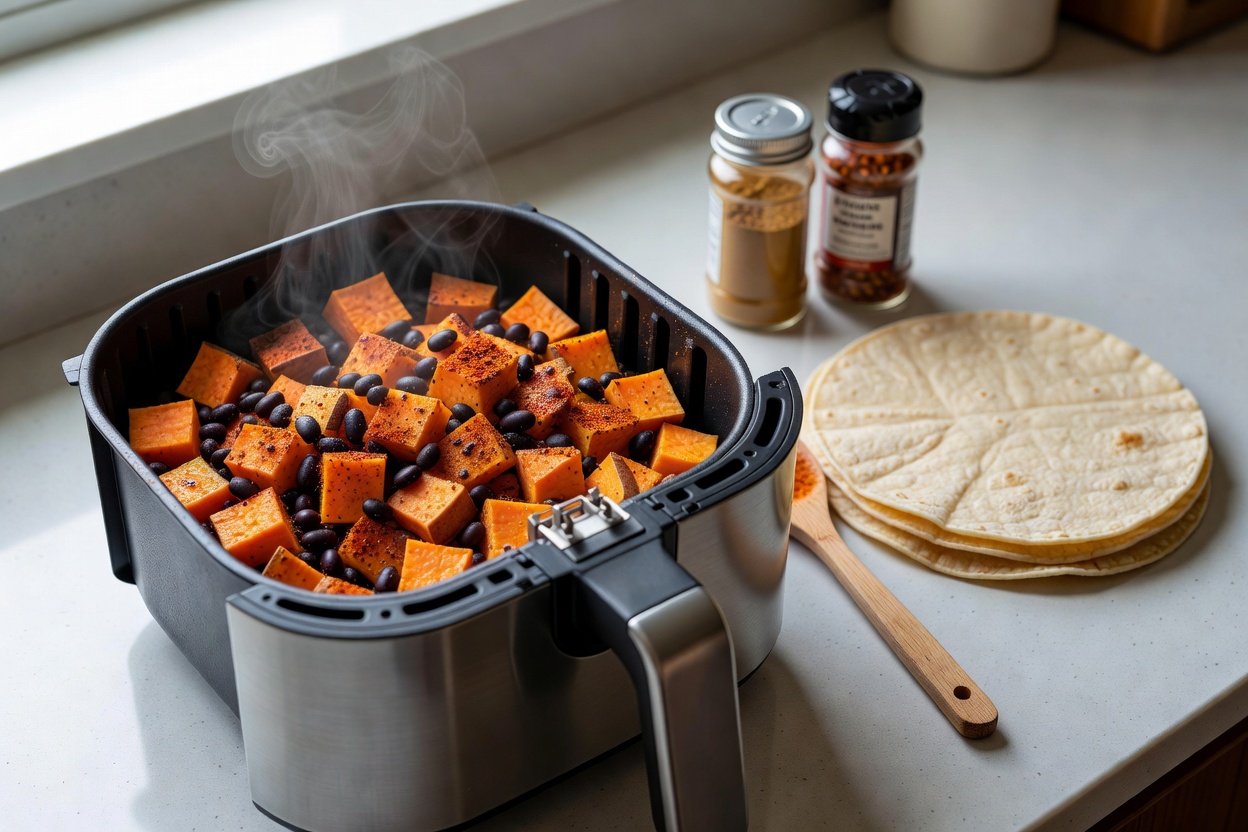
5. Sweet Potato and Black Bean Tacos
Shopping list: two large sweet potatoes, one can black beans, six corn tortillas, chili powder, cumin, and lime wedges. Macros per serving: 265 calories, 10 grams protein, 42 grams carbohydrates, 7 grams fat. Instructions: Cube sweet potatoes into half-inch pieces and season with spices. Air fry at 400 degrees Fahrenheit for 16 minutes until edges crisp. Warm beans separately and fill tortillas with the mixture. Top with lime juice for a bright finish that feels like a restaurant meal at home.
Cost-per-Serving Comparisons Versus Traditional Cooking
These air fryer meals generally cost less per serving than oven-roasted or stovetop versions because shorter cook times reduce energy use and minimal oil is required. Traditional frying often demands more oil and produces more waste from splatter cleanup. Batch cooking further lowers overall expenses by reducing repeat trips to the store and minimizing spoilage. Over a month, families notice meaningful savings when rotating these five recipes instead of relying on pre-packaged frozen dinners or frequent restaurant meals.
Time-Saving Batch Techniques
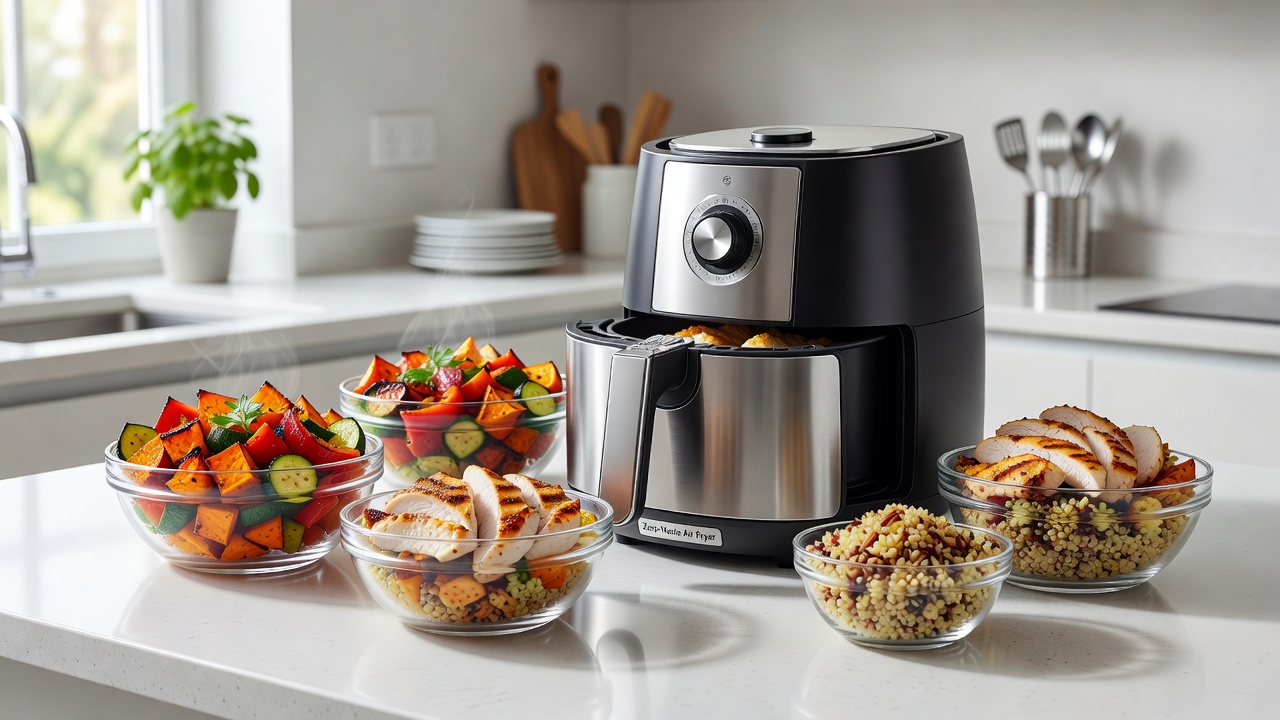
Prepare multiple batches of seasoned proteins and vegetables on weekends for rapid reheating during the week. Cook large quantities of chickpeas or sweet potatoes at once and store portions in airtight containers for up to four days. Use the air fryer for dual tasks such as roasting vegetables while crisping proteins in the same cycle by layering with parchment liners. These methods cut daily prep time dramatically while ensuring balanced meals remain available even on hectic evenings.
Practical Tips for Beginners and Common Mistakes to Avoid
New users should avoid overcrowding the basket, which prevents even cooking; cook in batches if necessary. Always preheat for two to three minutes when recipes call for it to achieve better texture. Season generously because the high heat can mellow flavors. Rotate or shake food halfway through every cook for consistent browning. Beginners also benefit from starting with forgiving ingredients like potatoes and chicken before moving to delicate fish.
Air Fryer Temperature and Time Reference Chart
- Chicken thighs: 380°F for 18 minutes, shake halfway
- Chickpeas and mixed vegetables: 400°F for 15 minutes, stir once
- Salmon fillets: 390°F for 12 minutes, no flip needed
- Turkey meatballs: 375°F for 14 minutes, check internal temperature
- Sweet potato cubes: 400°F for 16 minutes, shake twice
- Additional items such as frozen broccoli: 380°F for 10 minutes
FAQs on Minimizing Waste and Maximizing Value
How can I reduce food waste with air fryer meals? Use vegetable scraps to make quick broths and transform leftover proteins into salads or wraps the next day. What pantry staples stretch furthest? Legumes, whole grains, and frozen produce deliver the best nutrition per dollar spent. Are air fryer meals healthier than traditional methods? Yes, they require far less oil while retaining texture and flavor, aligning with guidelines from WHO healthy diet recommendations. How do I adapt recipes for different dietary needs? Swap proteins easily and increase vegetables for lower-calorie versions. Can I cook frozen items straight from the freezer? Yes, simply add three to five extra minutes and shake more frequently. What maintenance keeps an air fryer working efficiently for years? Clean the basket after every use and avoid abrasive scrubbers that damage the nonstick coating.
Conclusion
Embracing budget-friendly air fryer dinners supports both health and finances in 2026. With strategic sourcing, detailed recipes, smart batching, and attention to waste reduction, everyday cooks can create satisfying meals that deliver excellent value and nutrition every night of the week.
No comments yet. Be the first!