 Func Eats

Introduction to Goal-Based Nutrition for Skeletal Health
Building and maintaining bone density requires more than generic advice. In 2026, custom nutrition plans emphasize goal-based eating tailored to individual needs, lifestyle, and nutrient absorption. These plans prioritize key minerals and vitamins while balancing food sources for long-term skeletal resilience. Many adults overlook early signs of declining bone health until issues arise, making proactive strategies essential. Readers seeking to protect against osteoporosis and fractures will find value in understanding how specific nutrients interact within the body. This comprehensive guide covers essential components such as calcium, vitamin K2, and magnesium, provides direct comparisons between animal and plant sources, outlines a detailed step-by-step process for creating personalized daily menus, shares multiple practical food examples, highlights common mistakes, and answers frequently asked questions about supplement timing and lifestyle integration.
Essential Nutrients for Bone Density
Calcium: The Foundation Mineral
Calcium forms the structural base of bones and teeth. Adults typically require 1,000–1,200 mg daily, absorbed best when spread across meals rather than consumed in one large dose. Food-first approaches remain ideal because they deliver cofactors that enhance utilization and reduce the risk of kidney stones associated with isolated high-dose supplements. Deficiency symptoms include muscle cramps, brittle nails, and eventually reduced bone mineral density. Incorporating a variety of calcium-rich options throughout the day supports consistent absorption and helps maintain peak bone mass into later decades.
Vitamin K2: Directing Calcium to Bones
Vitamin K2 activates proteins that transport calcium away from arteries and into bone tissue, preventing unwanted calcification. Sources include fermented foods like natto and certain animal products such as egg yolks and liver. Pairing K2 with calcium optimizes results without excess supplementation. Research shows that adequate K2 intake improves bone strength markers over time, particularly when combined with weight-bearing activity. Many custom plans include small servings of these foods several times weekly to maintain steady levels.
Magnesium: Supporting Bone Matrix
Magnesium contributes to bone crystal formation and vitamin D activation, playing a critical role in over 300 enzymatic reactions. Leafy greens, seeds, and nuts provide bioavailable forms. Many adults fall short due to processed food diets, making targeted inclusion in daily plans critical for preventing fatigue and supporting recovery from exercise. Low magnesium can indirectly impair calcium metabolism, underscoring the need for balanced intake.
Vitamin D Synergy with These Nutrients
Vitamin D enhances calcium absorption in the intestines. While primarily obtained through sunlight, dietary sources like fatty fish complement the core trio. Custom plans often evaluate overall vitamin D status alongside calcium, K2, and magnesium to create synergistic effects that amplify bone-building outcomes.
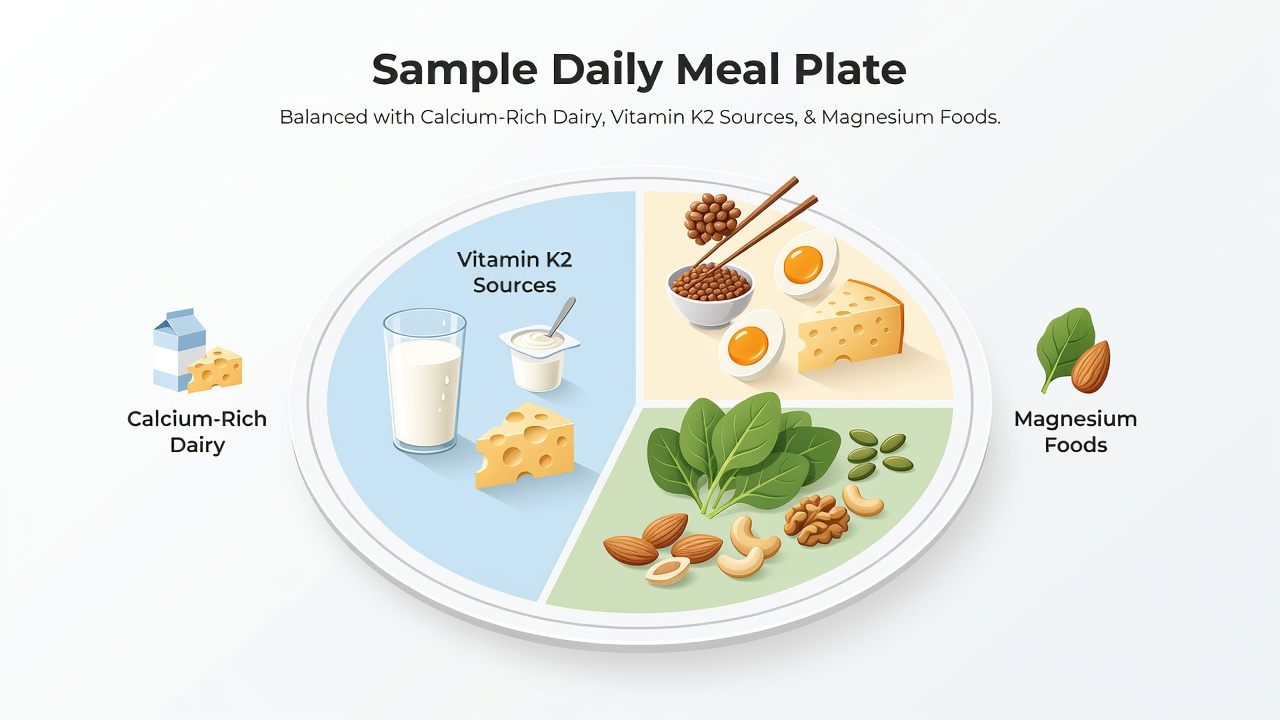
Animal vs. Plant-Based Sources Compared
Both animal and plant foods supply bone-supporting nutrients, yet they differ in absorption rates, bioavailability, and additional compounds that affect overall health.
- Animal sources such as dairy, sardines, and eggs often deliver highly bioavailable calcium and vitamin K2 with fewer anti-nutrients that could block absorption. For example, full-fat dairy provides natural K2 alongside calcium, supporting efficient uptake.
- Plant sources like kale, almonds, tofu, and fortified plant milks provide magnesium and calcium alongside fiber and antioxidants, though oxalates in some greens can reduce absorption by up to 50 percent in sensitive individuals.
- Combining both categories in custom plans maximizes nutrient variety and minimizes potential shortfalls while accommodating dietary preferences such as vegetarian or flexitarian lifestyles.
- Practical tip: Rotate between Greek yogurt for breakfast and spinach-based salads for lunch to cover multiple bases without over-relying on one category.
Step-by-Step Process for Personalized Daily Menus
Creating a custom plan involves systematic assessment and ongoing adjustment to match changing needs.
- Evaluate current intake using a three-day food log to identify precise gaps in calcium, K2, and magnesium. Note portion sizes and timing for accuracy.
- Set daily targets based on age, activity level, and any medical guidance from a healthcare provider. Adjust for factors like menopause or high-impact training.
- Select core foods from both animal and plant categories that align with taste preferences, allergies, and digestive tolerances. Prioritize whole foods over processed items.
- Build sample meals ensuring nutrient distribution across breakfast, lunch, dinner, and two snacks. Aim for 300–400 mg calcium per main meal.
- Track symptoms, energy levels, and digestion for two weeks, then refine portions or introduce new food rotations to prevent boredom.
- Reassess every three months or after major lifestyle changes such as increased exercise or travel. Consider periodic bloodwork for nutrient levels.
Practical Food Examples for Bone-Building Meals
Breakfast could feature Greek yogurt topped with pumpkin seeds, sliced kiwi, and a sprinkle of almonds for a strong calcium-magnesium-K2 combination. Lunch might include grilled salmon with steamed broccoli, quinoa, and a side of cheese. Dinner options include stir-fried tofu with kale, sesame seeds, and a small portion of liver pâté on whole-grain toast. Snacks such as a handful of Brazil nuts paired with fortified almond milk or sardines on cucumber slices help meet remaining targets. For variety, a mid-week menu could swap salmon for egg-based frittatas loaded with spinach and mushrooms. These examples scale easily for families or individuals with different calorie needs while keeping the focus on nutrient density.
Common Mistakes to Avoid
Many people undermine their efforts by consuming all calcium in one sitting, ignoring vitamin K2 entirely, or neglecting magnesium-rich foods in favor of calcium-only supplements. Another frequent error is overlooking oxalate-rich foods without balancing them with vitamin C sources that improve absorption. Skipping weight-bearing exercise while focusing solely on diet also limits results. Finally, inconsistent tracking leads to unnoticed shortfalls over months.
FAQ: Supplement Timing and Lifestyle Factors
When should supplements be taken?
Calcium is best split into doses under 500 mg with meals containing some fat. Vitamin K2 pairs well with dietary fat at dinner for optimal activation. Magnesium can be taken in the evening to support relaxation and overnight bone repair processes.
How do lifestyle factors influence results?
Weight-bearing exercise such as walking or resistance training amplifies dietary efforts by stimulating bone formation. Adequate sleep, stress management, and limited alcohol intake further support nutrient utilization. Sun exposure of 10–15 minutes several times weekly aids vitamin D production, which works synergistically with the discussed nutrients.
Can custom plans replace medication for osteoporosis?
Nutrition plans serve as powerful preventive and supportive tools but should complement, not replace, prescribed treatments. Always consult a physician before making major dietary changes if diagnosed with bone loss.
Conclusion
Custom nutrition plans centered on calcium, vitamin K2, and magnesium deliver measurable support for bone strength when implemented consistently. By following the outlined steps, incorporating diverse food sources, and avoiding common pitfalls, individuals can create sustainable strategies that promote skeletal health well into the future. For additional evidence-based guidance, consult resources from the NIH Office of Dietary Supplements, World Health Organization, and Mayo Clinic.


No comments yet. Be the first!