 Func Eats

Introduction to Sarcopenia Prevention Through Nutrition
Sarcopenia, the progressive loss of skeletal muscle mass and strength that occurs with aging, impacts a large portion of adults over 60 and increases risks of falls, fractures, and loss of mobility. In 2026, custom nutrition plans represent an advanced, evidence-based method to counteract this condition by emphasizing precise nutrient timing, synergistic food combinations, and personalized adjustments rather than one-size-fits-all recommendations. This comprehensive how-to guide explores specialized approaches for older adults, focusing on leucine-rich protein sources consumed at optimal intervals, strategic vitamin D intake for muscle support, and omega-3 fatty acid integration to reduce inflammation. Readers will discover detailed comparisons between outdated aging diets and modern optimized strategies, multiple sample daily meal frameworks, step-by-step instructions for creating individual plans, methods for tracking progress, and practical answers to frequently asked questions about pairing nutrition with resistance training.
By following these guidelines, adults over 60 can maintain independence and physical function longer. The emphasis on goal-based eating ensures that every meal contributes directly to muscle protein synthesis, setting 2026 plans apart from previous approaches.
Understanding Sarcopenia and Its Nutritional Triggers
Sarcopenia begins subtly around age 40 but accelerates after 60, with average muscle loss rates of 3-8% per decade if unaddressed. Key nutritional triggers include insufficient protein distribution across the day, low leucine availability, vitamin D deficiency common in older populations due to reduced sun exposure and absorption, and inadequate omega-3 levels that fail to combat chronic inflammation. Addressing these through custom plans allows for targeted interventions that go beyond basic caloric needs.
Key Nutrients for Combating Sarcopenia
Three primary nutrients form the foundation of effective 2026 plans. First, leucine acts as the primary trigger for muscle protein synthesis; research shows that 2.5 to 3 grams per meal, consumed three to four times daily, maximizes results. Excellent sources include whey protein, eggs, Greek yogurt, and lean meats. Second, vitamin D enhances muscle contraction and reduces fall risk; adults over 60 should target blood levels above 30 ng/mL through fortified foods, fatty fish, or supervised supplementation. Third, omega-3 fatty acids from sources like salmon, mackerel, and flaxseeds help preserve muscle by lowering catabolic pathways and supporting recovery after activity.
Authoritative guidance from the National Institute on Aging underscores the value of combining these nutrients rather than relying on protein in isolation.
Traditional Aging Diets vs. 2026 Optimized Strategies
Conventional diets for seniors typically recommended a general increase in protein without regard to timing or specific amino acid thresholds, often resulting in meals spread unevenly and leucine doses below the activation level. These older models also overlooked synergies, such as consuming vitamin D with dietary fat for better absorption or aligning omega-3 intake with evening recovery periods. In contrast, 2026 strategies employ goal-based eating patterns that front-load leucine around physical activity windows, incorporate anti-inflammatory foods consistently, and use periodic bloodwork to fine-tune vitamin D status. This results in more reliable muscle retention and functional improvements over time.
Step-by-Step Guide to Building Your Custom Nutrition Plan
Creating a personalized plan involves careful assessment and iteration. Begin by obtaining baseline measurements through a healthcare provider, including body composition scans and vitamin D blood tests. Next, calculate daily protein needs at 1.2 to 1.6 grams per kilogram of body weight, dividing this across four eating occasions to ensure each delivers sufficient leucine. Incorporate timing rules by scheduling protein-rich meals within two hours after resistance sessions. Choose whole-food sources first, such as cottage cheese for breakfast or tuna for lunch, then supplement gaps only when necessary. Adjust for dietary restrictions by swapping animal proteins with leucine-enhanced plant options like soy isolates or fortified pea protein. Finally, establish weekly review checkpoints to modify portions based on energy levels, strength gains, or appetite changes. An example for a 75-kilogram individual might start with 25 grams of protein at each main meal plus a 15-gram snack.
Sample Daily Meal Frameworks for Sarcopenia Prevention
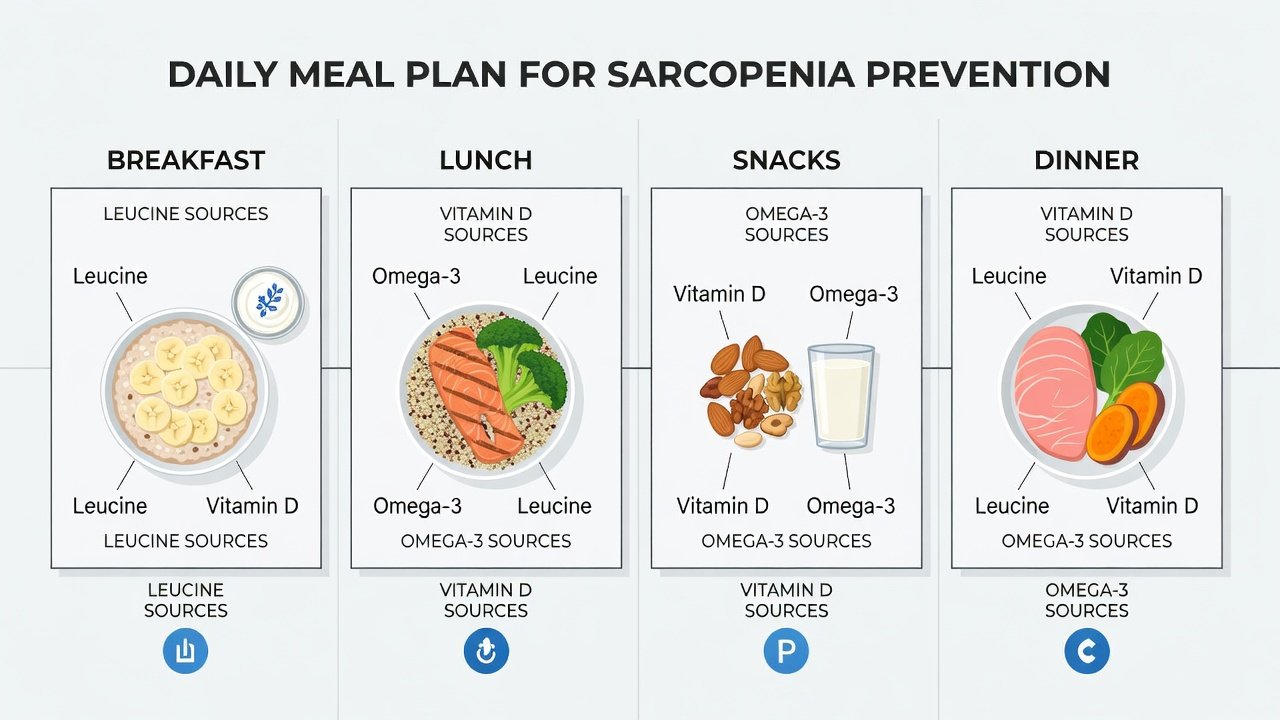
Here are two varied daily frameworks suitable for adults over 60. Framework 1 focuses on higher animal protein: Breakfast features three scrambled eggs with spinach and a glass of fortified milk delivering approximately 28 grams protein and 2.8 grams leucine. Mid-morning includes Greek yogurt topped with almonds. Lunch consists of grilled chicken breast salad with olive oil and quinoa. Afternoon snack offers a small portion of cottage cheese. Dinner includes baked salmon with sweet potatoes and broccoli for omega-3 benefits. Framework 2 adapts for variety with breakfast of overnight oats mixed with whey protein and berries, lunch of lentil soup enhanced with egg whites, and dinner of turkey meatballs paired with vegetables. Both frameworks prioritize nutrient timing around activity and can be scaled based on individual calorie requirements.
Integrating Nutrition with Resistance Training for Best Results
Nutrition works most effectively when paired with consistent resistance training performed two to three times weekly. Focus on compound movements such as seated leg presses, wall push-ups, and resistance band rows using light to moderate loads. Consume a leucine-rich meal or shake 30 to 60 minutes post-session to capitalize on the anabolic window. The World Health Organization supports combined lifestyle approaches for healthy aging populations. Track session intensity alongside meal logs to identify patterns that accelerate progress.
Progress Tracking Methods and Long-Term Adjustments
Reliable tracking includes monthly grip strength tests using a handheld dynamometer, waist circumference measurements, and self-reported energy scores on a 1-10 scale. Digital apps allow logging of meal timing and macronutrients while wearable devices monitor activity levels. Reassess vitamin D status every three months and adjust plans seasonally, such as increasing fortified foods during winter months when sun exposure decreases. If progress stalls, redistribute protein more evenly or add an extra snack containing 20 grams of protein.
Mistakes to Avoid When Implementing Custom Plans
Common pitfalls include consuming all daily protein in one large evening meal, which fails to hit leucine thresholds repeatedly; neglecting vitamin D monitoring leading to persistent low levels; and skipping resistance training, which diminishes nutritional benefits. Another error is making abrupt changes without professional guidance, potentially causing digestive discomfort. Always introduce modifications gradually over two weeks.
Frequently Asked Questions About Sarcopenia Nutrition
How soon will visible or measurable improvements appear?
Most adults notice better strength and stamina within 8 to 12 weeks when nutrition and training are combined consistently, though muscle mass changes may take longer to register on scans.
Are these plans suitable for vegetarians or those with food allergies?
Yes, vegetarian adaptations rely on dairy, eggs, and leucine-fortified plant proteins while allergy-friendly versions substitute with tolerated alternatives like fish or seeds under dietitian supervision.
Should supplements replace whole foods?
Supplements serve only as backups when dietary intake proves insufficient after testing; whole-food sources remain preferable for additional micronutrients and fiber.
How does hydration factor into these nutrition plans?
Adequate fluid intake of at least 2 liters daily supports muscle function and nutrient transport, so include water or herbal teas with every meal.
Conclusion
Custom 2026 nutrition plans empower adults over 60 to prevent sarcopenia through deliberate choices in leucine timing, vitamin D optimization, and omega-3 integration alongside resistance training. By following the detailed step-by-step process, using sample meal frameworks as starting points, and applying consistent tracking methods, individuals can achieve sustained muscle health and greater quality of life. Begin implementation today with a healthcare consultation and personalize as results unfold.
No comments yet. Be the first!