 Func Eats

2026 Targeted Diets for Healthy Aging & Longevity
Adults over 55 are increasingly turning to specialized nutrition to extend healthspan rather than just lifespan. In 2026, targeted diets emphasize cellular repair, inflammation control, and personalized macronutrient balance backed by ongoing research from leading health authorities. These approaches move beyond generic advice to focus on measurable outcomes such as improved muscle retention, reduced chronic inflammation, and enhanced cognitive function. By integrating nutrient timing with specific food patterns, individuals can create sustainable routines that support longevity while accommodating common age-related changes like slower metabolism and altered nutrient absorption.
Nutrient Timing for Cellular Repair
Aligning meals with circadian rhythms supports autophagy and reduces oxidative stress. Consuming protein-rich foods within a 10-12 hour window, followed by a 12-14 hour overnight fast, enhances cellular cleanup processes. For example, finishing dinner by 7 p.m. allows overnight repair mechanisms to activate more effectively. Research indicates that time-restricted eating can improve insulin sensitivity in older adults, particularly when combined with resistance training. Practical implementation involves starting with a 12-hour window and gradually narrowing it while monitoring energy levels. Individuals with medications or medical conditions should consult healthcare providers before adjusting meal timing significantly. Examples include scheduling breakfast at 8 a.m. and dinner at 6 p.m. to allow digestive rest overnight, which may also improve sleep quality and morning alertness.
Anti-Inflammatory Food Patterns
Chronic inflammation accelerates aging. Focus on foods that lower markers like CRP and IL-6. Emphasize berries, leafy greens, fatty fish, nuts, and olive oil while limiting processed sugars and refined grains. These patterns align closely with recommendations from National Institute on Aging. Adding turmeric, ginger, and green tea provides additional compounds that modulate inflammatory pathways. A sample daily pattern might include a breakfast of oatmeal topped with blueberries and walnuts, a lunch salad with salmon and olive oil dressing, and a dinner of lentil soup with mixed vegetables. Over weeks, this approach can lead to noticeable reductions in joint stiffness and improved skin health. Tracking inflammatory symptoms alongside dietary changes helps personalize the pattern further.
Mediterranean Versus Plant-Forward Longevity Diets
The Mediterranean diet, rich in olive oil, fish, and whole grains, consistently shows strong results for cardiovascular and cognitive health. Plant-forward approaches, such as the Blue Zones-inspired eating style, prioritize legumes, vegetables, and minimal animal products. Both reduce all-cause mortality risk; the choice depends on individual preferences and digestive tolerance. A hybrid model often works best for long-term adherence. For instance, the Mediterranean style excels in providing omega-3s from seafood, while plant-forward eating delivers higher fiber for gut microbiome diversity. Real-world examples show Mediterranean adherents experiencing lower rates of heart disease, whereas plant-forward eaters often report better weight management. Transitioning between the two can involve swapping fish for tofu on some days while retaining olive oil as a staple. Mayo Clinic resources highlight how both diets support healthy aging when followed consistently.
Personalized Macronutrient Adjustments
After age 55, protein needs often rise to 1.2–1.6 g per kg of body weight to preserve muscle. Carbohydrates should come primarily from fiber-rich sources, while healthy fats support hormone balance. Adjust based on activity level, kidney function, and blood markers through consultation with a registered dietitian. For a 70 kg individual, this translates to roughly 84–112 grams of protein daily, spread across meals to maximize muscle protein synthesis. Carbohydrates at 45–60% of calories from vegetables, fruits, and whole grains provide steady energy without blood sugar spikes. Fats from avocados, nuts, and seeds round out the plate. An example adjustment for someone with reduced kidney function might lower protein slightly while increasing plant proteins like beans. Monitoring body composition quarterly allows fine-tuning, such as increasing protein on strength training days to 1.8 g per kg temporarily.
Micronutrient Focus Areas: Omega-3s and Polyphenols
Omega-3 fatty acids from fish or algae oil help maintain brain volume and reduce joint inflammation. Aim for 1–2 g combined EPA/DHA daily. Polyphenols from colorful produce, dark chocolate, and green tea activate sirtuins linked to longevity. Track intake using simple food logs to ensure consistent consumption. Specific sources include sardines for omega-3s and pomegranate or green tea for polyphenols. In practice, adding a handful of walnuts and a cup of berries daily can meet much of the polyphenol target. For those avoiding fish, algae supplements provide a direct alternative. Blood tests for omega-3 index every six months guide whether dietary sources suffice or if targeted supplementation is warranted. These micronutrients also interact with macronutrient choices, as higher fiber intake improves polyphenol absorption in the gut.
Step-by-Step Guidance for a 7-Day Custom Plan
- Assess current eating patterns and health goals with a professional, including recent bloodwork for vitamin levels and inflammation markers.
- Choose a base diet (Mediterranean or plant-forward) and set protein targets based on body weight and activity.
- Build each day around three meals plus one snack within your eating window, incorporating seasonal produce for variety.
- Incorporate two servings of fatty fish or algae oil, five servings of vegetables, and polyphenol sources daily while balancing macronutrients.
- Prep ingredients in advance, such as batch-cooking lentils and roasting vegetables, and adjust portions based on energy levels and hunger cues.
- Review progress weekly by noting sleep, digestion, and mood, then tweak for satiety or digestion issues.
- Reassess bloodwork every three months and consult a dietitian for refinements.
Sample day one might feature Greek yogurt with berries for breakfast, a quinoa salad with chickpeas and greens for lunch, and grilled salmon with broccoli for dinner. Subsequent days rotate proteins and vegetables to prevent boredom while maintaining nutrient density.
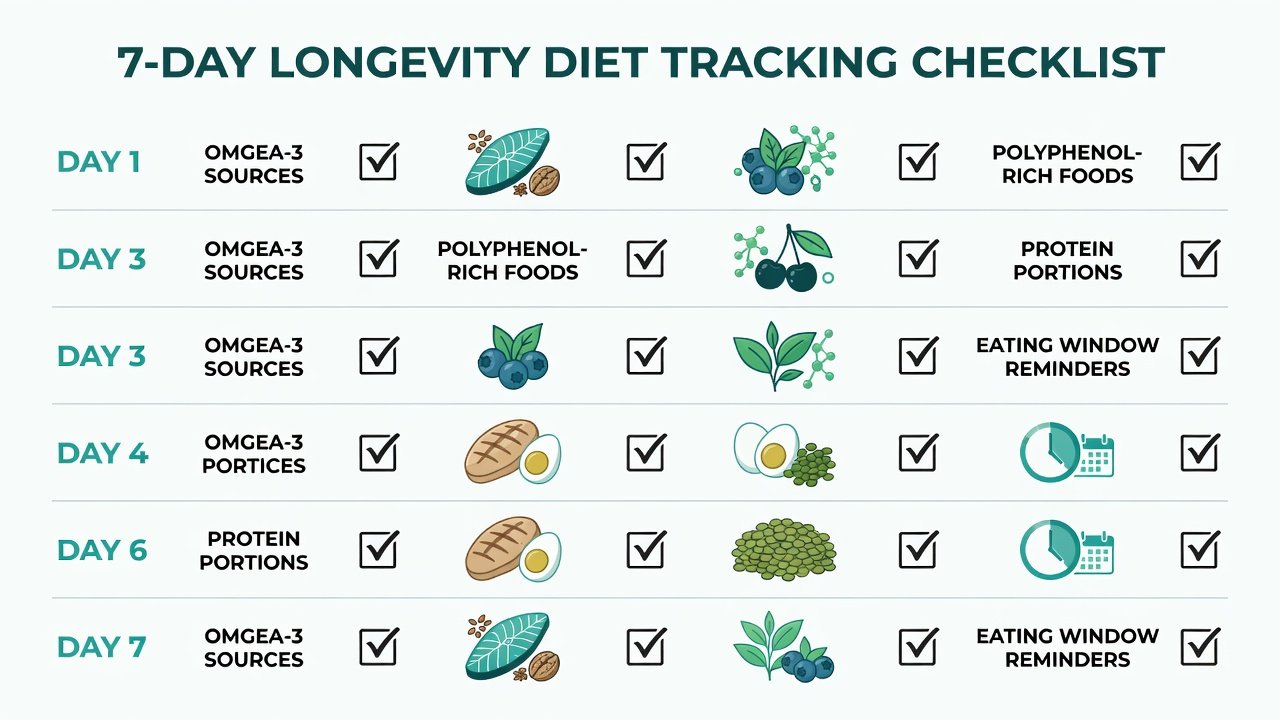
Simple Tracking Checklist
- Protein target met each day with sources logged
- Omega-3 source included at least once daily
- Polyphenol-rich foods logged across meals
- Eating window observed consistently
- Water intake of 2–3 liters tracked
- Daily movement of at least 30 minutes recorded
- Weekly notes on weight, energy, and any digestive changes
- Monthly review of supplement use if applicable
Frequently Asked Questions
Do I need supplements?
Whole foods remain the priority. Supplements for vitamin D, B12, and omega-3s may be useful if blood levels are low, but always test first and discuss with a physician to avoid interactions.
How many calories should I eat?
Calorie needs vary widely based on activity and metabolism. Focus on nutrient density rather than strict counting unless managing specific conditions like diabetes.
Can these diets reverse aging?
They support healthier aging and may slow certain biomarkers, but reversal claims lack strong evidence according to sources like Harvard Health Publishing.
What if I have dietary restrictions?
Adapt by substituting allergens or preferences, such as using flaxseeds instead of fish for omega-3s, while maintaining overall patterns for benefits.
Conclusion
Implementing targeted nutrition strategies in 2026 offers adults over 55 practical tools to enhance vitality. Start with small, consistent changes and monitor results to build a sustainable longevity plan that evolves with personal health data.


No comments yet. Be the first!